
How Pest Control Automation Is Streamlining Services in 2026
The Digital Transformation of Canadian Pest Control
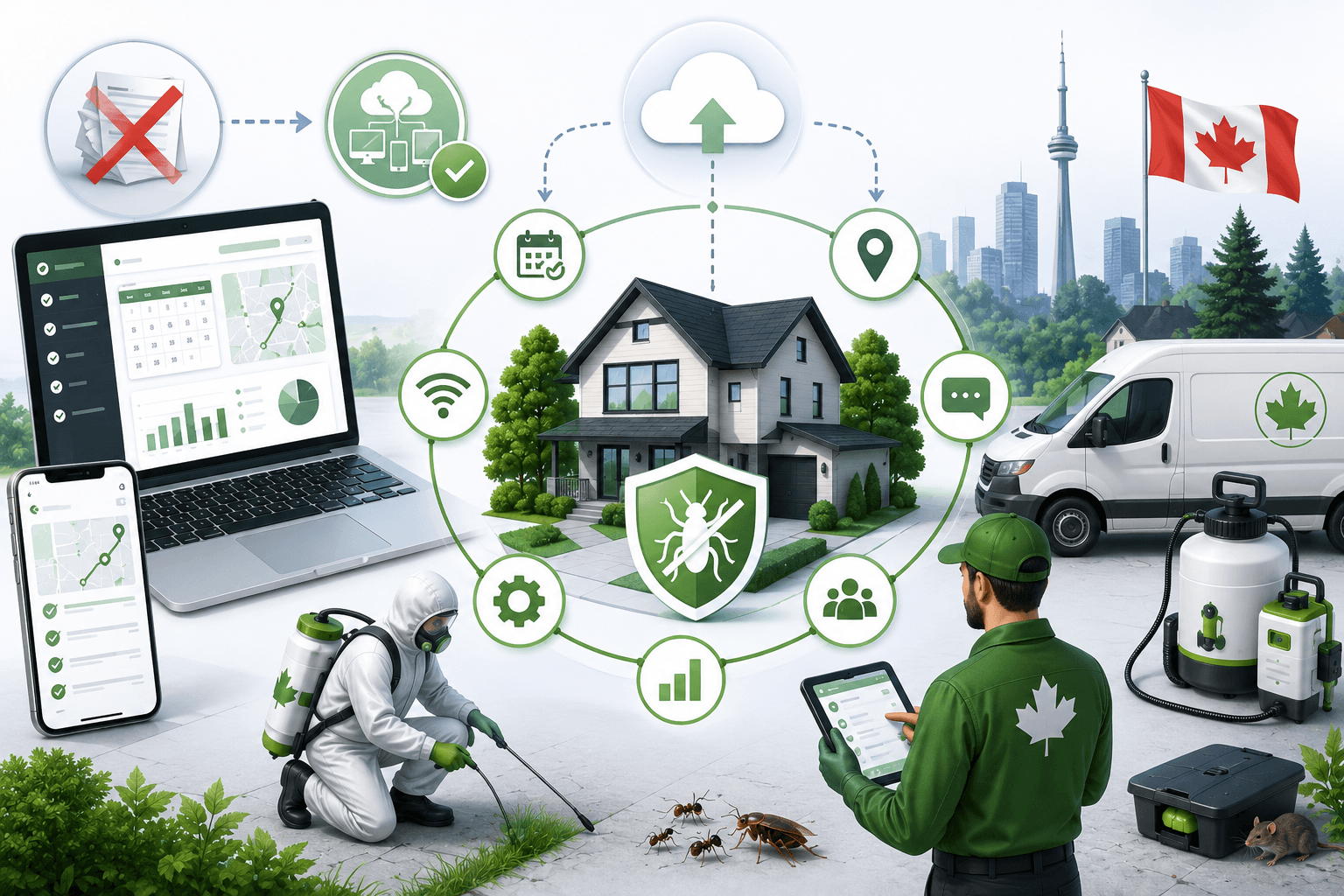
Pest control automation is revolutionizing how Canadian companies operate, replacing outdated paper systems with intelligent cloud platforms that optimize scheduling, routing, and customer communication across every service touchpoint.
This transformation extends beyond simple software adoption. It represents a fundamental shift in how pest management professionals deliver services, compete for customers, and scale their operations in major markets from Vancouver to Toronto.
Modern automation technologies solve critical operational challenges while improving outcomes for customers battling rodents, ants, bed bugs, and termites. This guide explores practical implementation strategies that deliver measurable results for Canadian pest control businesses.
Why Canadian Pest Control Companies Are Embracing Automation
Manual processes create bottlenecks that cost money and frustrate customers. Traditional pest control operations rely on phone calls, paper service agreements, and handwritten treatment logs that slow everything down. Dispatchers spend hours creating routes manually while field technicians waste fuel driving inefficient paths across Ontario, British Columbia, or Quebec.
The numbers tell a sobering story. Companies using outdated methods lose 15-20% of potential revenue to scheduling errors and missed appointments. Administrative overhead consumes resources that could go toward growth. Canadian winters add another layer of complexity, with seasonal demand fluctuations requiring flexible resource allocation strategies.
Pest control automation solves these problems by connecting every part of the operation. Integrated systems sync scheduling, routing, billing, and customer communications in real time. The result? More jobs completed daily, happier customers, and technicians who can focus on eliminating pests instead of wrestling with paperwork.
How Automation Technologies Transform Daily Operations
Smart Scheduling Eliminates Chaos
Automated scheduling platforms use algorithms to assign jobs based on technician location, skill level, and equipment availability. The system accounts for service history, customer preferences, and travel time between appointments. Drag-and-drop interfaces let managers adjust schedules instantly when emergencies arise.
Canadian companies report dramatic improvements. Companies like Pest Troopers reduced no-show rates by 60% after implementing automated appointment reminders. The system sends SMS notifications 24 hours before scheduled visits, giving customers easy options to confirm or reschedule.
Route Optimization Cuts Fuel Costs
GPS tracking and route optimization software calculate the most efficient paths for daily service runs. The technology considers traffic patterns, weather conditions, and job duration estimates. Some advanced platforms factor in Canadian road conditions during winter months, adjusting routes when highways become hazardous.
Fuel savings average 25-30% for companies that switch from manual routing. That translates to thousands of dollars annually for mid-sized operations running 5-10 trucks. Reduced drive time also means technicians complete more appointments per day, directly boosting revenue per technician.
Mobile Apps Empower Field Teams
Mobile applications give service technicians everything they need in one place. They access customer information, service agreements, past treatment logs, and property photos before arriving. Digital chemical tracking ensures compliance with regulations while eliminating paperwork errors.
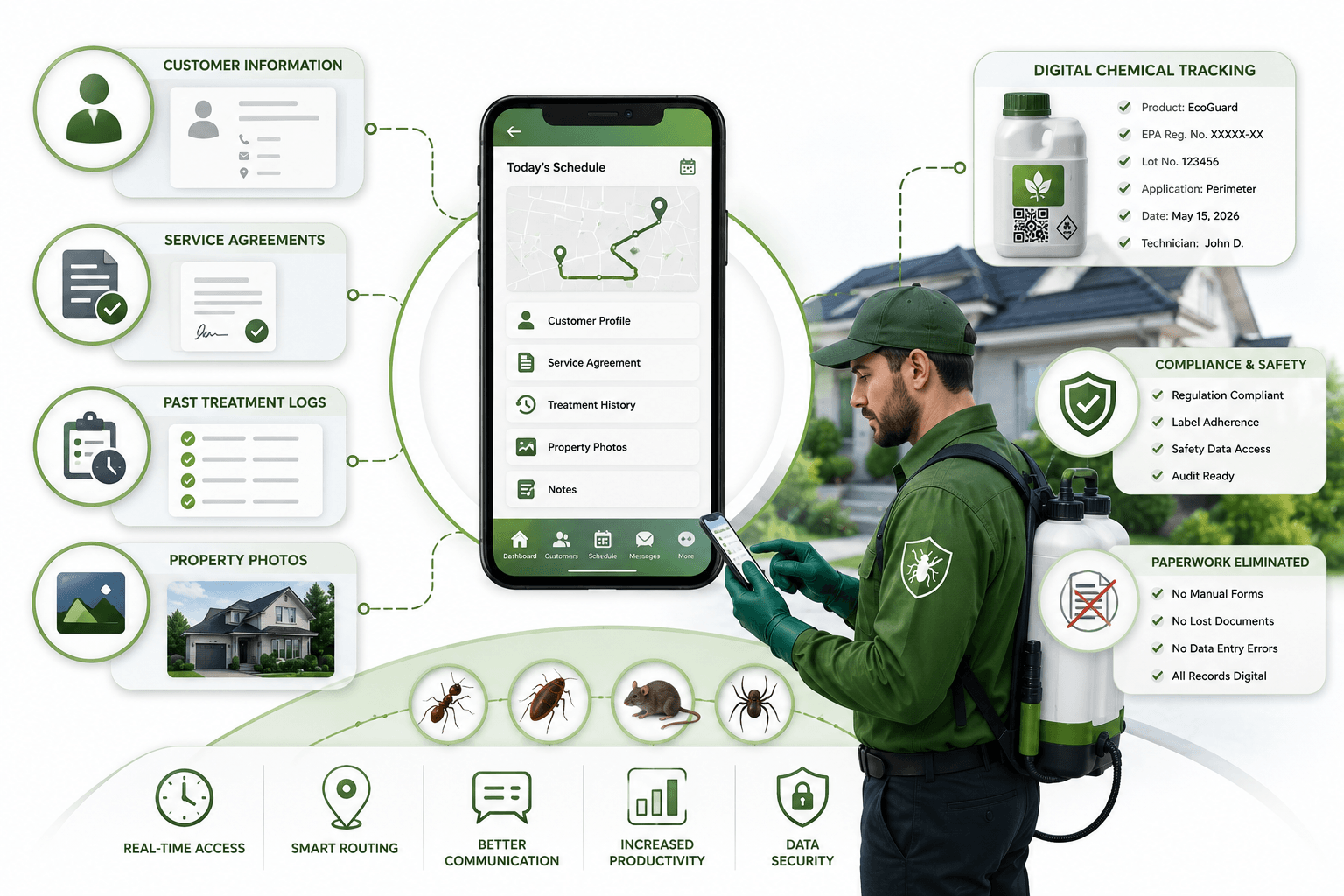
Digital signatures on tablets or smartphones speed up job completion. Technicians photograph evidence of pest activity, document pesticide application details, and collect payments on-site. All data syncs instantly to the cloud platform, updating office staff and customers simultaneously.
Step-by-Step Implementation Guide for Canadian Companies
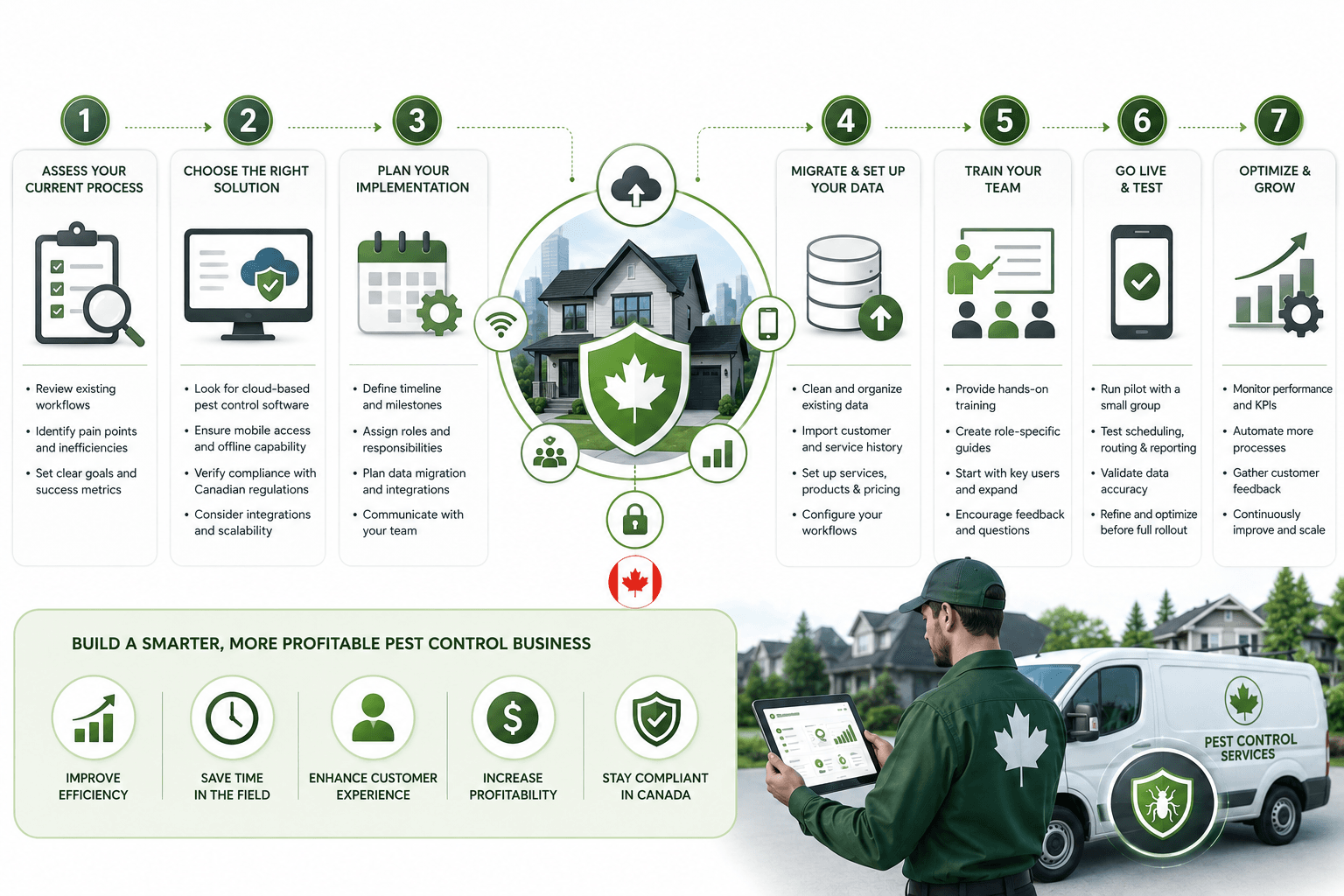
Step 1: Audit Current Processes. Document how your team currently handles scheduling, routing, billing, and communication. Identify the biggest time-wasters and error-prone tasks.
Step 2: Choose the Right Platform Evaluate pest control software options like FieldRoutes, PestPac, ServiceTitan, or WorkWave. Look for Canadian-specific features like bilingual support and integration with Canadian payment processors.
Step 3: Plan Data Migration Transfer customer records, service history, and recurring services information to the new system. Clean up duplicate entries and verify contact details during migration.
Step 4: Train Your Team Start with office staff, then move to field technicians. Conduct hands-on workshops using real scenarios. Schedule follow-up sessions to address questions as they arise.
Step 5: Launch in Phases Begin with one service area or team. Monitor performance metrics daily during the first month. Expand gradually once processes stabilize.
Step 6: Optimize Based on Data Use performance dashboards to identify improvement opportunities. Adjust routes, refine scheduling optimization rules, and gather feedback from technicians and customers.
Measuring Automation Success: Key Metrics
Track jobs completed daily per technician before and after implementation. Successful automation typically increases this by 15-20% within six months. Monitor fuel costs per job to verify route optimization delivers promised savings.
Customer satisfaction scores provide qualitative feedback. Survey customers about appointment convenience, technician professionalism, and communication clarity. Look for improvements in on-time arrivals and first-call resolution rates.
Financial metrics matter most to business owners. Calculate revenue per customer, customer lifetime value, and profit margins quarterly. Automation should steadily improve all three. Track accounts receivable aging to confirm faster payment collection.
Natural Efficiency Boosters: Low-Tech Automation Wins
Not every improvement requires expensive software. Simple workflow automation delivers quick wins while your team adjusts to major platform changes.
Email templates for common customer inquiries save CSR time. Create standardized messages for appointment confirmations, service reminders, and follow-up inspections. Set up auto-responders for after-hours contact form submissions.
Checklists on laminated cards help technicians remember every step during termite inspections or rodent removal jobs. Standardized procedures reduce callbacks and ensure consistent service quality across your team.
Batch processing days for administrative tasks prevent constant interruptions. Designate specific times for entering invoices, reviewing accounts receivable, or updating inventory management records.
Professional Automation Solutions: Enterprise-Grade Tools
AI-Powered Predictive Analytics
Advanced platforms use machine learning to forecast pest patterns based on historical data, weather trends, and seasonal services demand. Predictive modeling helps Canadian companies prepare for spring ant invasions or fall rodent activity before customers start calling.
FarmSense technology deployed in agricultural regions identifies pest detection patterns that translate to urban environments. The system alerts managers when conditions favor mosquito breeding or cockroach infestations, enabling proactive customer engagement.
Automated Customer Communication Platforms
Marketing automation tools nurture leads and retain existing clients. The system sends personalized emails based on service history, property type, and past pest activity. Birthday discounts, seasonal promotions, and educational content arrive automatically.
Review management features prompt satisfied customers to share feedback on Google My Business and industry directories. Positive reviews boost local SEO while automated responses to negative comments show professionalism.
Integrated Financial Systems
Billing automation eliminates manual invoice creation. The platform generates invoices immediately after job completion, applies customer-specific pricing from service contracts, and sends via email. Auto-billing for recurring revenue customers happens on schedule without human intervention.
Payment processing integration accepts credit cards, ACH transfers, and digital wallets. Canadian companies appreciate systems that handle both CAD transactions and cross-border payments for properties near US borders. Cashless operations reduce collection delays and improve cash flow.
Canadian Market Insights: Regional Automation Adoption
British Columbia leads in sustainable practices integration, with Vancouver-area companies combining automation with eco-friendly pest control methods. Software tracks IPM strategies and reduces chemical usage to meet environmental regulations.
Toronto and the Greater Toronto Area show the highest adoption of subscription models and online booking features. Urban density drives demand for mobile-first customer experiences. Companies report that 65% of new customers book initial appointments through web portals.
Quebec operations prioritize bilingual automation platforms. Systems must support French-language customer portals, service reminders, and technician apps to serve the market effectively. Some platforms offer region-specific pest libraries featuring species common to the St. Lawrence Valley.
Prairie provinces leverage automation for multi-location management across vast service territories. Route planning algorithms account for extreme winter conditions that can double travel times between rural properties.
When to Call Professional Automation Consultants
Consider expert help if your company has more than 10 technicians or operates across multiple cities. Implementation complexity increases exponentially with business size. Consultants assess your specific needs, recommend appropriate platforms, and manage data migration to minimize disruption.
Call specialists when integrating automation with existing ERP systems, QuickBooks, or industry-specific tools. API integration requires technical expertise to ensure seamless data flow between platforms.
Bring in outside help if internal resistance threatens adoption. Change management professionals train teams effectively and address concerns about technology replacing jobs. The truth: automation handles repetitive tasks so humans can focus on solving complex pest problems.
Expert Insights on Canadian Automation Trends
Industry veterans emphasize starting simple. "Companies that succeed focus on one or two major pain points first," notes Dan Gordon of PCO Bookkeepers & M & M & M & M&A Specialists. "They perfect scheduling automation before tackling advanced predictive analytics."
Canadian pest control operators report that customer retention improves significantly with automation. Automated service reminders ensure clients never miss preventive treatments. This consistency reduces emergency calls and spreads revenue more evenly throughout the year.
The shift toward subscription-based services accelerates with automation. Platforms make recurring billing effortless while customers appreciate predictable protection. Weather considerations matter more in Canada than US markets. Platforms serving Canadian companies must handle appointment rescheduling when winter storms hit. Smart systems automatically notify affected customers and propose alternative dates without dispatcher intervention.
Future-Proofing Your Canadian Pest Control Business
Pest control automation continues evolving rapidly. Generative AI will soon handle complex customer inquiries through conversational interfaces. Computer vision technology will analyze photos from smart traps to identify species automatically.
IoT devices will monitor commercial properties 24/7, alerting companies to pest activity before customers notice problems. Imagine sensors in restaurant kitchens that detect rodent movements and trigger immediate dispatch of emergency services.
Autonomous robots may assist with routine inspections in large facilities. Drones already inspect rooflines for wasp nests and termite damage in hard-to-reach areas. As regulations evolve, expect more autonomous devices supporting human technicians.
Companies investing in automation today position themselves to adopt these innovations seamlessly. The foundation of integrated systems, mobile workflows, and data-driven decision-making supports whatever comes next.
Conclusion: Taking Action on Automation
Pest control automation represents the most significant operational transformation in decades for Canadian companies. Modern technology delivers quantifiable cost savings, enhanced efficiency, and superior customer experiences across all service areas.
Strategic implementation of cloud-based platforms, mobile applications, and AI-powered tools creates sustainable competitive advantages. Companies like Pest Troopers embracing these solutions position themselves for long-term growth in an increasingly demanding marketplace.
The future belongs to pest control businesses that leverage automation intelligently. Those investing in digital transformation today will dominate tomorrow's market, delivering exceptional service while maintaining profitability and operational excellence.
FAQ Section
How much does pest control automation cost for a small Canadian company?
Basic platforms start around $100-200 per user monthly, with setup fees of $1,000-3,000. Mid-tier solutions with route optimization and customer portals run $200-400 per user. Enterprise systems with advanced AI features can exceed $500 per user. Most companies achieve positive ROI within 4-8 months through cost reduction and increased capacity.
Will automation eliminate jobs for dispatchers and office staff?
Automation shifts roles rather than eliminating them. Dispatchers become operations analysts who optimize processes using performance dashboards. Office staff focus on customer relationships and business development instead of data entry. Companies typically reallocate staff rather than reduce headcount, using freed capacity to support business growth.
What happens if internet connectivity fails in remote Canadian areas?
Quality pest control software includes offline capabilities for mobile apps. Technicians complete jobs normally, with data syncing once connectivity resumes. The system queues all changes and updates servers when internet access returns. Choose platforms specifically designed for field service to ensure robust offline functionality.
How does automation help with seasonal demand fluctuations?
Predictive analytics forecast busy periods based on historical data and weather patterns. Systems suggest ideal staffing levels months in advance. Automated scheduling maximizes technician utilization during peak spring and fall seasons. Marketing automation nurtures leads during slower winter months, ensuring steady bookings year-round through strategic customer engagement.
Can automation integrate with existing QuickBooks accounting?
Most modern platforms offer API integration with QuickBooks, Sage, and other accounting software. Financial data flows seamlessly between platforms without manual intervention or duplicate data entry efforts.This eliminates duplicate data entry and ensures financial records match operational data. Verify integration capabilities during vendor selection to avoid compatibility issues later.
Is pest control automation suitable for companies focusing on eco-friendly methods?
Absolutely. Digital tracking helps companies document IPM strategies and reduce pesticide application rates. Systems log biological controls and alternative treatments alongside traditional methods. Customers increasingly demand sustainable practices, and automation provides verifiable proof of environmental responsibility. Chemical usage reports demonstrate commitment to green pest control.
How long does full implementation take for a 15-truck operation?
Expect 2-4 months for complete rollout including data migration, training, and optimization. Phased implementation reduces risk by starting with 3-5 trucks for the first month. Add remaining vehicles once processes stabilize. Training programs run concurrently with the pilot phase. Most companies operate fully on new systems within 90 days, though continuous improvement continues indefinitely.