DIY Pest Control: The Limitations of Store-Bought Solutions

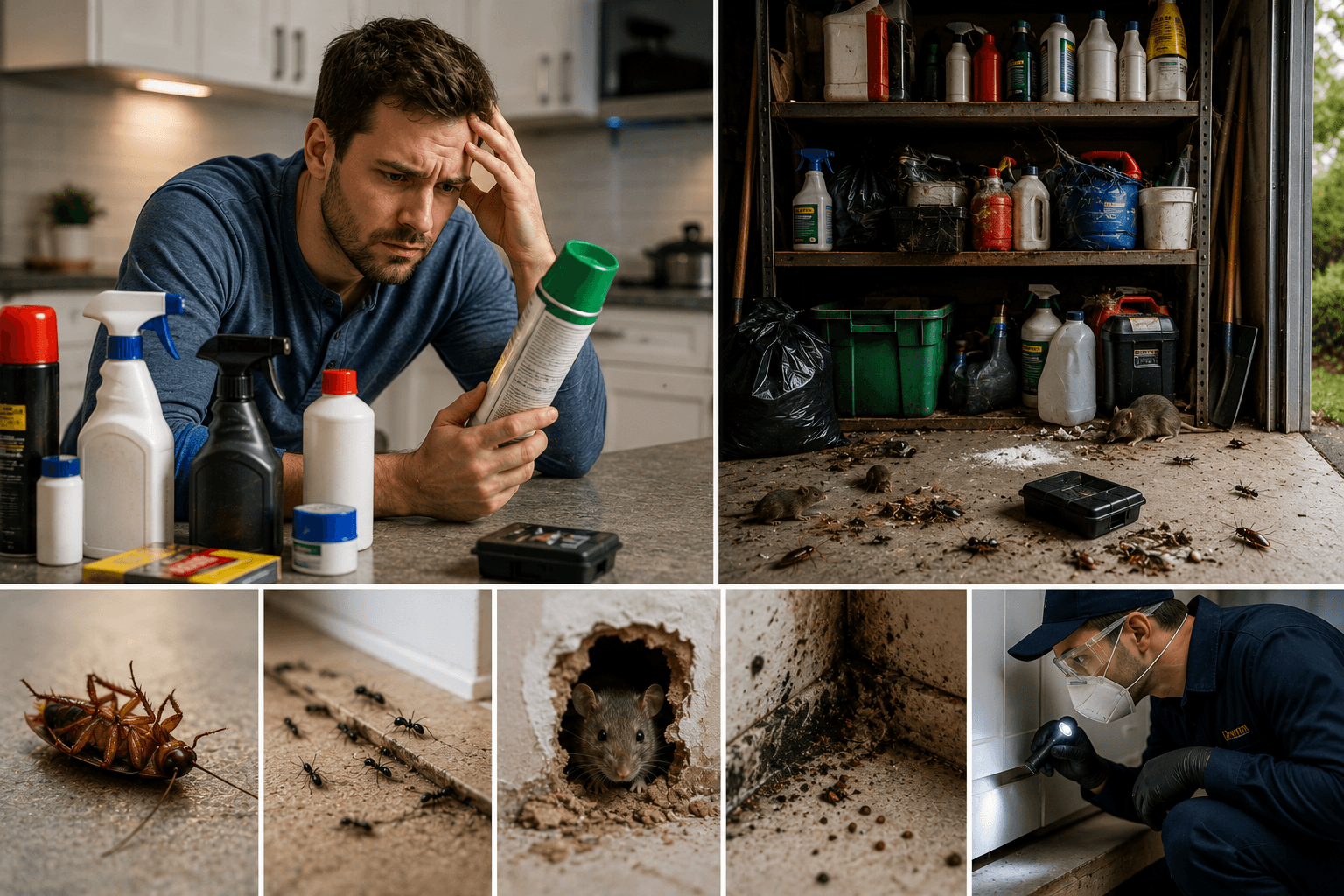
You've spotted cockroaches scurrying across your kitchen counter at 2 AM. Or maybe you've noticed carpenter ants trailing along your baseboards. Your first instinct? Grab a can of bug spray from the local hardware store and take matters into your own hands. After all, how hard can it be?
If you're like most Canadian homeowners, you've already learned the frustrating truth: DIY pest control vs professional treatments reveals a massive gap in effectiveness. That $15 bottle of insecticide might kill a few visible pests, but the infestation beneath your walls continues to grow, costing you more money and peace of mind with each passing week.
The reality is that store-bought pest control products are designed for minor problems and quick profits, not comprehensive solutions. While professional exterminators invest years learning pest biology, behavior patterns, and advanced treatment methods, DIY enthusiasts are left playing a dangerous guessing game with toxic chemicals and their family's safety.
In this comprehensive guide, we'll expose why over-the-counter pest solutions consistently fail, the hidden dangers lurking in your garage alongside those spray bottles, and when it's time to stop wasting money on products that simply don't work.
Why Store-Bought Pest Products Set You Up for Failure
The Potency Problem: Watered-Down Solutions
Walk into any Canadian hardware store, and you'll find dozens of pest control products promising miraculous results. What they won't tell you? These consumer-grade formulations contain significantly lower concentrations of active ingredients compared to professional-grade products.
Licensed pest control technicians have access to commercial-grade treatments that are 3-5 times stronger than anything you'll find at retail stores. This isn't just about marketing, it's about efficacy and regulatory compliance.
Here's what makes professional products superior:
Higher concentration of active ingredients approved for licensed applicators
Microencapsulated formulas that provide long-lasting residual protection
Non-repellent technologies that eliminate entire colonies rather than scattering them
Specialized application equipment ensures proper coverage and penetration
When you compare DIY pest control vs professional treatments, you're essentially comparing a water pistol to a fire hose. Both might look similar, but the results tell a vastly different story.
Misidentification: Your Most Expensive Mistake
Do you think all ants are the same? That costly assumption has led countless Canadian homeowners to make infestations significantly worse. Carpenter ants require completely different treatment protocols than pavement ants or pharaoh ants. Using the wrong approach doesn't just waste money; it can cause pests to split their colonies and spread throughout your home.
Consider termites versus carpenter ants. Both create wood damage, but they require entirely different eradication methods. Termites feed on cellulose in wood, while carpenter ants excavate galleries but don't consume the material. Treating suspected termites with an ant bait accomplishes nothing except giving the real culprits more time to destroy your home's structural integrity.
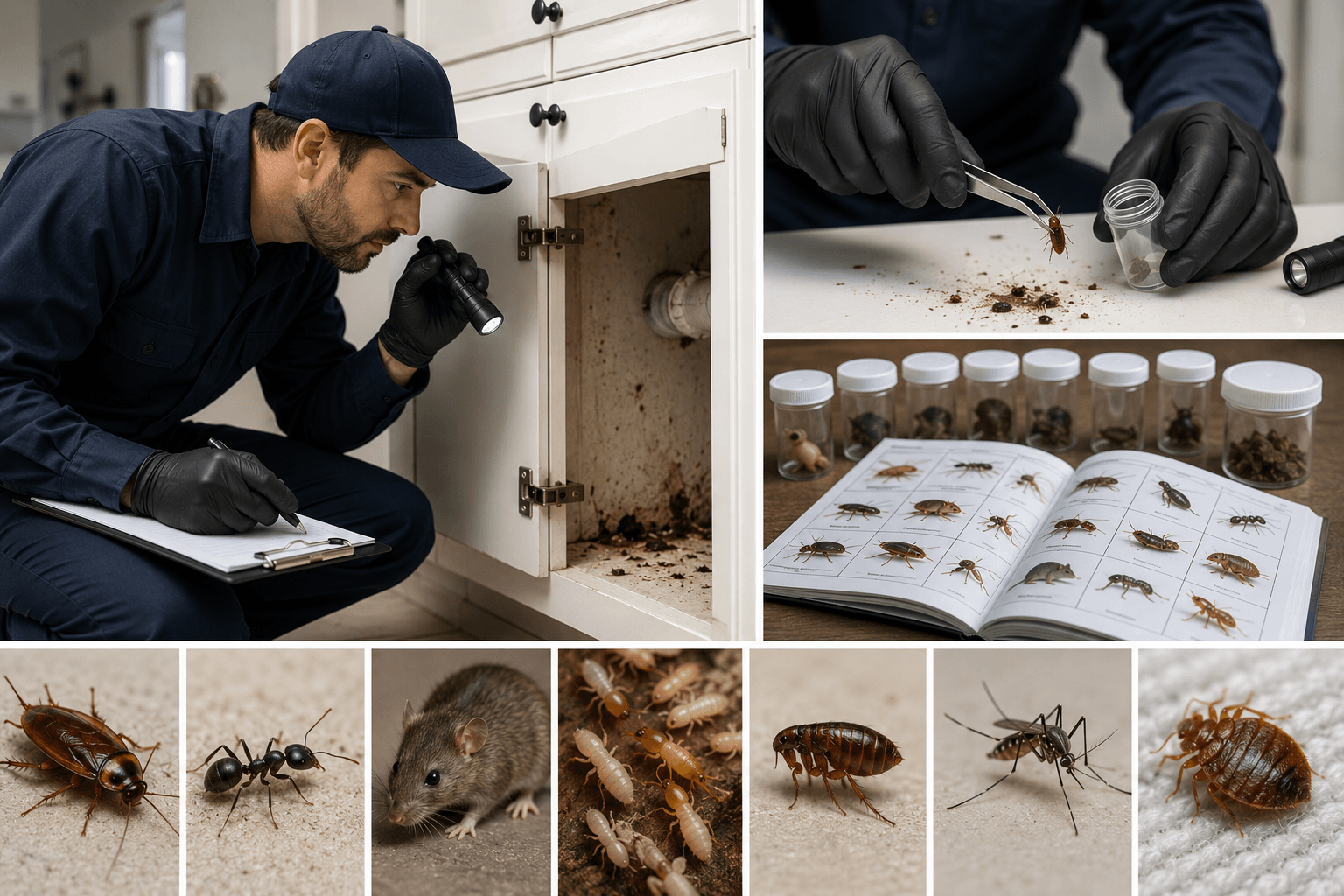
Professional pest inspections include accurate species identification, which is foundational to any successful treatment plan. Certified technicians can distinguish between dozens of similar-looking insects and rodents, understanding their unique biology, breeding cycles, and behavioral patterns.
The Iceberg Effect: Treating Symptoms, Not Causes
You spray visible bugs. They die. Problem solved, right? Wrong.
What you see represents roughly 10-20% of the actual infestation. The remaining 80-90% lives in wall voids, attic spaces, crawlspaces, and other hidden areas where your store-bought spray will never reach.
Bed bugs perfectly illustrate this problem. You might kill the adults crawling on your mattress, but their eggs remain safely tucked in mattress seams, electrical outlets, and baseboards. Within weeks, a new generation emerges, and you're back where you started, except now you've spent $200 on various products and your infestation has actually grown.
Professional pest control addresses the complete pest lifecycle:
Thorough inspections identifying all harborage areas and entry points
Targeted treatments reaching hidden nests and breeding sites
Preventive measures, such as eliminating food sources and moisture issues
Follow-up visits ensure complete colony elimination
The comparison between DIY pest control and professional approaches highlights why surface treatments fail. Exterminators don't just kill visible pests; they eliminate entire populations and prevent future problems.
The Hidden Dangers Lurking in Your Garage
Chemical Hazards: When Good Intentions Turn Toxic
That innocent-looking can of bug spray contains powerful neurotoxins designed to kill living creatures. Used improperly, these pesticides pose serious health risks to your family, especially children and pets who play on floors where chemical residues accumulate.
Common DIY pest control mistakes include:
Overapplication leading to dangerous toxic exposure
Mixing incompatible chemicals creates harmful reactions
Applying indoor products outdoors (or vice versa)
Ignoring safety labels and protective equipment requirements
Storing pesticides improperly, risking accidental poisoning
Canadian poison control centers report thousands of pesticide-related incidents annually, with the majority involving consumer products misused in homes. Respiratory irritation, skin burns, nausea, and more severe reactions can occur when safety protocols are ignored by homeowners, even when professional technicians follow them consistently.
Licensed pest control companies carry liability insurance and follow strict safety regulations. Their technicians complete extensive training on proper application techniques, personal protective equipment, and environmental protection. When you choose DIY pest control vs professional services, you're also choosing between amateur chemical handling and certified expertise.
Property Damage: The $10,000 Mistake
Improper pesticide application doesn't just risk your health; it can also seriously damage your property. Oil-based sprays stain carpets and upholstery. Excessive moisture from liquid treatments can promote mold growth in wall cavities. Some products corrode electrical wiring or damage finishes on woodwork and countertops.
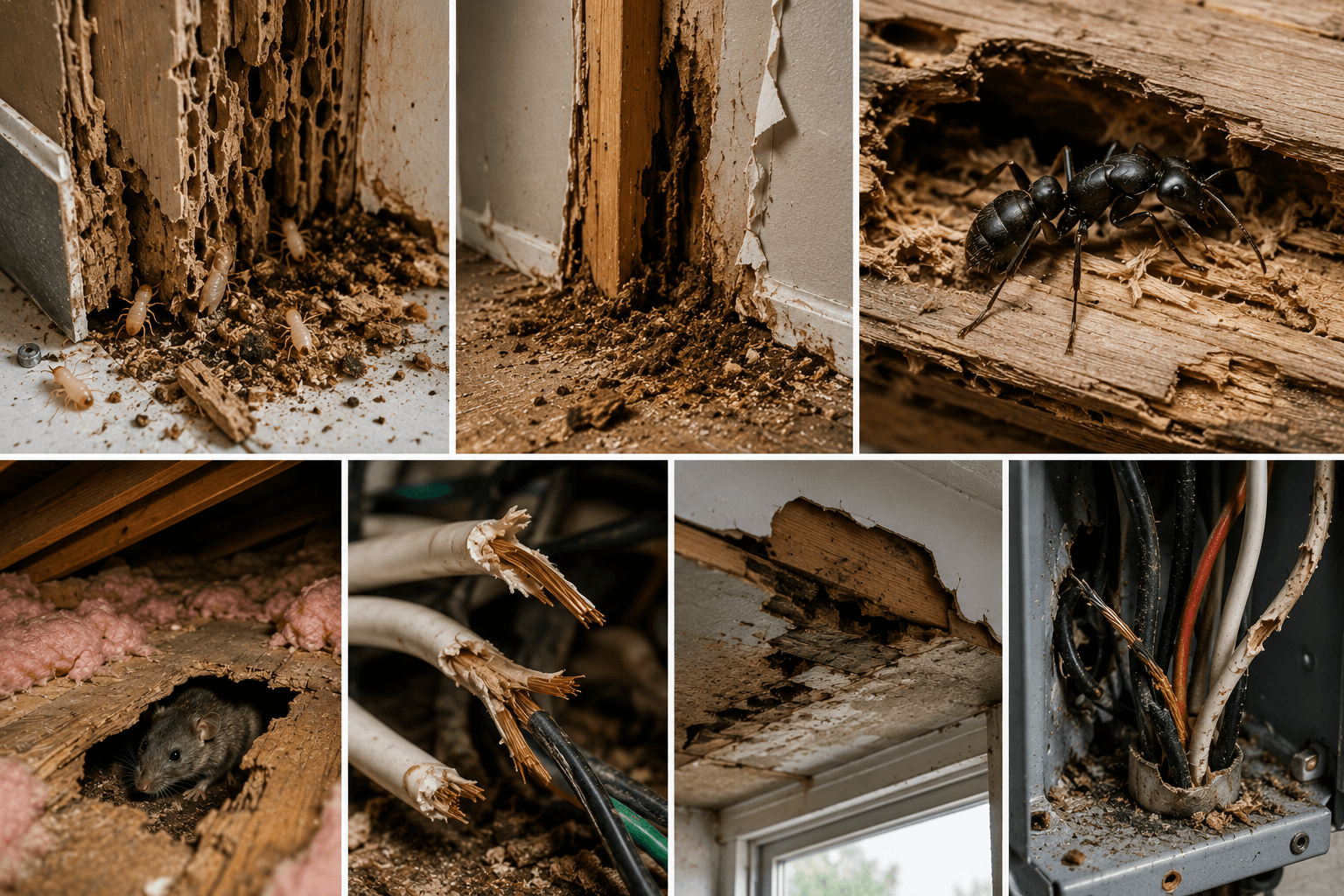
But the most expensive property damage comes from delayed professional intervention. While you experiment with store-bought products, termites continue consuming your home's structural support. Carpenter ants excavate larger galleries. Rodents chew through wiring, creating fire hazards.
The average Canadian homeowner spends $300-800 on failed DIY pest control attempts before finally calling professionals. By that point, the infestation has often worsened significantly, requiring more extensive (and expensive) treatment protocols. Factor in structural repairs, and your initial savings evaporate quickly.