
Complete Wildlife Removal Guide for Ontario Homeowners: Raccoons, Squirrels, Skunks and More

Wildlife does not knock before moving in. One day your attic is quiet, and the next you hear scratching above your ceiling at 2 a.m. This complete wildlife removal guide walks Ontario homeowners through everything they need to know about raccoons, squirrels, skunks, and other common intruders.
You will learn how to spot the signs early, what Ontario law actually allows you to do, and when it makes sense to call in a professional instead of handling it yourself. Every section connects to the next, so by the end you will have a full picture of how to protect your home safely, legally, and without wasting money on the wrong fix.
Whether you own a century home in Toronto or a newer build in Ottawa, wildlife does not care about postal codes. It cares about shelter, warmth, and food. That is exactly where we start.
Why Ontario Homes Attract Wildlife
Ontario's mix of older housing stock, mature trees, and cold winters creates ideal conditions for wildlife to seek shelter indoors. Raccoons, squirrels, and skunks are not looking to cause trouble. They simply want warmth, food, and a safe place to raise their young.
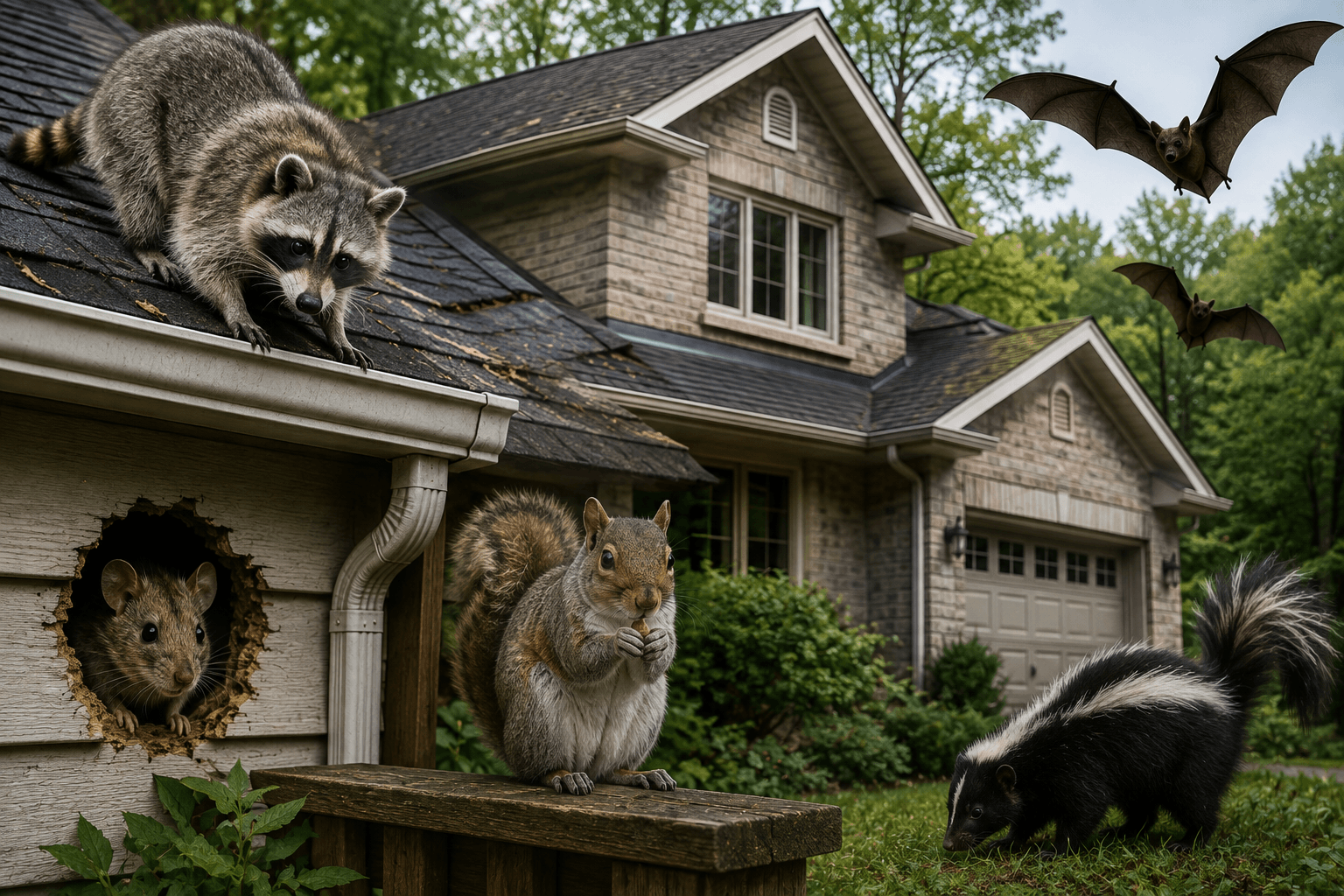
As cities like Toronto, Mississauga, and Hamilton keep expanding, natural habitats shrink. Animals adapt by moving into neighbourhoods instead, and a warm attic looks a lot like a hollow tree to a raccoon or squirrel.
Common entry points include:
- Loose or damaged roof vents
- Gaps around chimneys
- Cracks in the foundation
- Torn soffits and fascia
- Unsecured garbage bins
- Uncapped plumbing stacks on the roof
Once one animal finds a way in, others often follow the same scent trail. This is why early action matters so much, and why understanding the legal side of removal comes before you touch a single trap.
Ontario Wildlife Removal Laws Every Homeowner Should Know
Before trapping or removing any animal, you need to understand the rules. Ontario's wildlife protections fall under the Fish and Wildlife Conservation Act, and the regulations are stricter than most homeowners expect.
Here is what the law actually requires:
- Animals that are live trapped can only be released within 1 kilometre of the capture site, and only after a short holding period, since Ontario law only permits capturing an animal alive if it is released within 24 hours and no more than 1 km away.
- Removing wildlife during the spring and summer maternity season is restricted, since this is when raccoons and squirrels are raising their young, and it is illegal to disturb or remove animals during sensitive periods such as maternity season, which typically runs from March to August for raccoons and squirrels, unless there is a health or safety concern.
- Destroying the den of a wild mammal generally requires approval from the Ministry of Natural Resources and Forestry, though this rule does not apply to fox or skunk dens.
- Only licensed trappers, registered wildlife control businesses, immediate family members of the property owner, or authorized municipal staff are permitted to remove wildlife on someone else's behalf.
Many municipalities add their own bylaws on top of provincial rules. GTA cities, for example, often ban discharging any device to harm wildlife within city limits and prohibit feeding raccoons or other animals outright.
This is why a complete wildlife removal guide always starts with the law. Getting this part wrong can lead to fines and can leave animals injured or trapped inside your walls. For the full provincial rules, the Ontario Ministry of Natural Resources and Forestry publishes an updated breakdown of wildlife control regulations that every homeowner can check before taking action.
Raccoons in Your Attic: Signs, Risks, and Removal Steps
Raccoons are the most common wildlife problem in Ontario homes, especially in the Greater Toronto Area. They are strong, intelligent, and surprisingly good at finding weak spots in a roofline.
Signs of a raccoon problem include:
- Heavy thumping or rolling sounds in the attic, usually at night
- Torn insulation or shredded ductwork
- A strong smell of urine or droppings near vents
- Flattened grass paths leading to the roof or foundation
- Visible pry marks around roof vents or soffit corners
Raccoons can carry rabies, and Ontario has worked hard to control this risk. There were no cases of raccoon variant rabies detected in Ontario for the second year in a row, though 91 cases of rabies overall were confirmed in Ontario in 2024, following 56 cases in 2023 and 61 cases in 2022. In fact, Ontario has historically reported more rabies cases than any other Canadian province, with Ontario recording the highest number of reported rabies cases in Canada in 2022, at 61 cases.
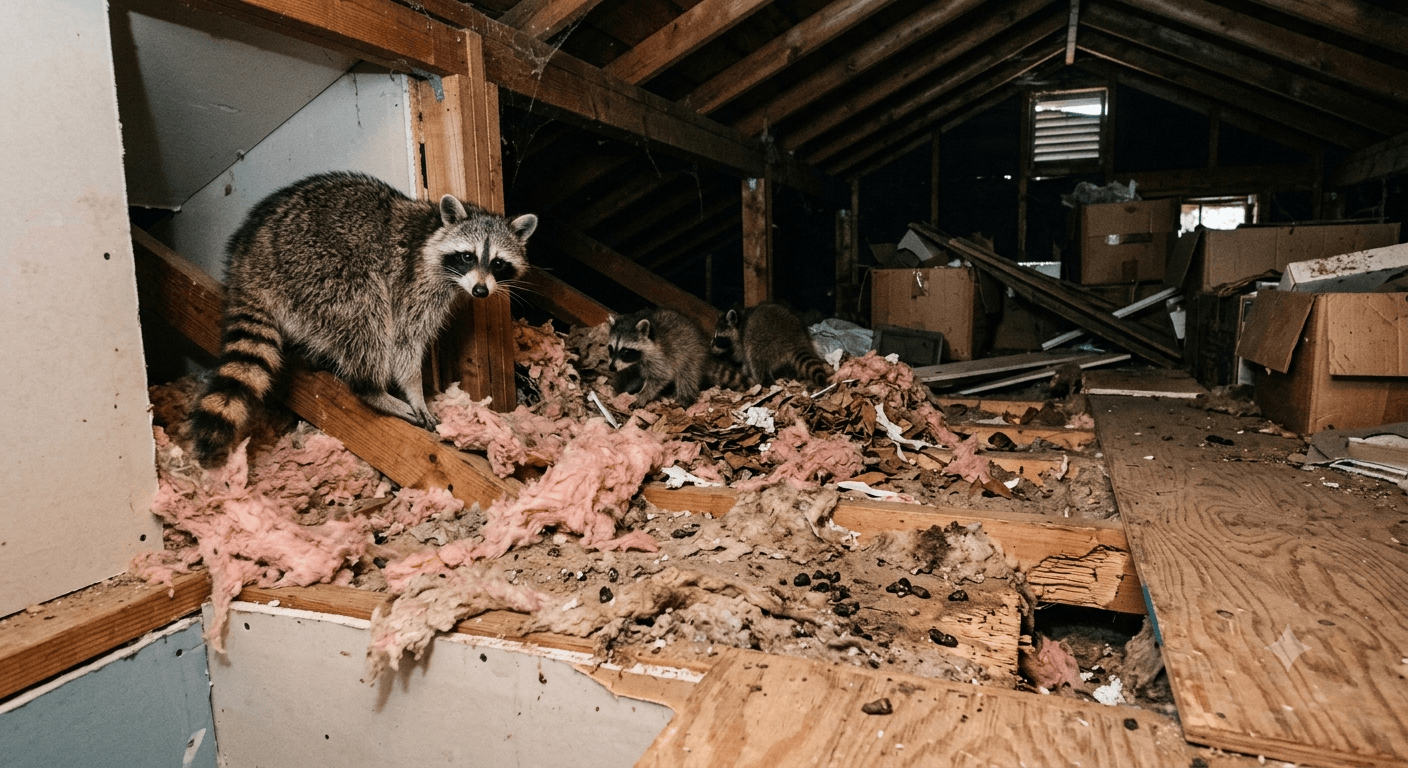
Because raccoons often leave young behind during maternity season, removal must be done carefully. A single door device installed by a professional lets the adult raccoon leave while preventing it from coming back in, which protects both the animal and your home. Repairs to insulation and vents usually follow right after removal.
Squirrels in the Roof: Signs, Risks, and Removal Steps
Squirrels get into attics through smaller gaps than most homeowners expect, sometimes as narrow as a golf ball. Once inside, they chew through wiring and wood, which raises the risk of electrical damage and even fire.
Watch for:
- Scratching sounds during daylight hours, since squirrels are active by day
- Chewed wires, wood trim, or soffit corners
- Nesting material such as leaves and shredded paper in the attic
- Squirrels seen repeatedly entering the same roof spot
- Small oily rub marks around entry holes
Squirrels can be live trapped and relocated within the same municipality, but a licence is still required for this work. Their breeding season stretches longer than most people realize, often running from late winter right through fall, so timing matters when planning removal.
Sealing entry points after removal is essential, since squirrels will often return to a familiar nesting site within days if the opening is left unsecured.
Skunks Under the Deck: Signs, Risks, and Removal Steps
This complete wildlife removal guide would not be finished without covering skunks, since they behave very differently from raccoons and squirrels. Skunks prefer ground-level shelter rather than attics. Decks, sheds, and porches are their favourite spots, especially in spring when females are looking for a den to raise young.
Signs of a skunk include:
- A strong, unmistakable odour near a deck or shed
- Small holes dug in the lawn while searching for grubs
- Sagging soil or a visible burrow entrance under a structure
- Nighttime sightings near garbage areas
Skunks fall under the same relocation rules as raccoons, and their dens do not require ministry approval before disturbance, unlike most other furbearing mammals. Even so, skunks should be handled by someone experienced, since a startled skunk will spray without warning, and the smell can linger on siding and wood for weeks.
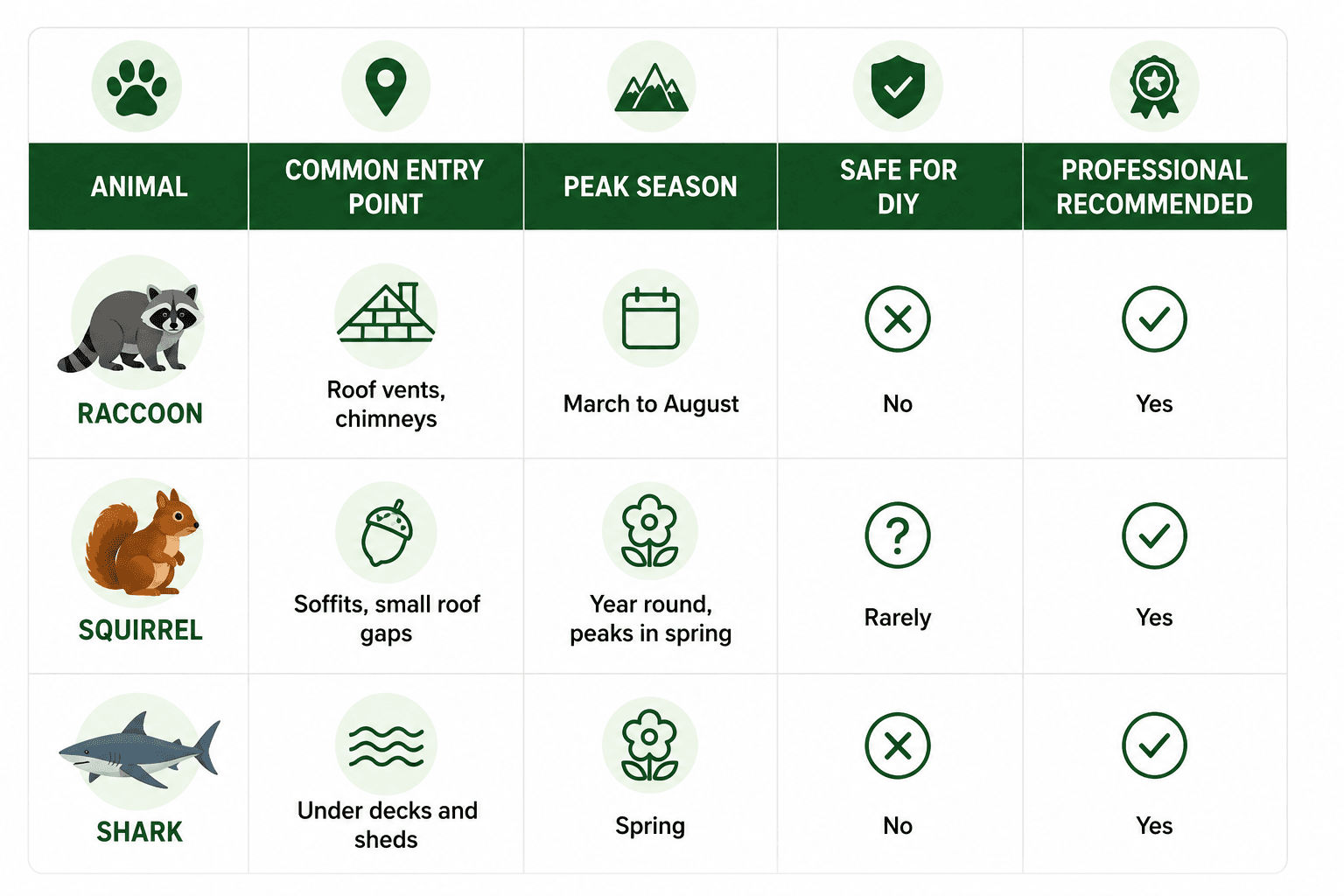
Quick Comparison Table
Common Myths About DIY Wildlife Removal
Many homeowners believe wildlife removal is a simple weekend job. These myths often lead to bigger problems down the road.
- A trapped animal solves the problem. Trapping without sealing the entry point just means a new animal moves in weeks later.
- Repellent sprays keep animals out for good. Sprays may deter an animal briefly, but they rarely stop a determined raccoon or squirrel from returning.
- Any hardware store trap is legal to use. Ontario restricts who can trap and relocate wildlife, and using the wrong method can lead to fines.
- Skunks only spray if you touch them. Skunks can spray from several feet away when startled by noise or sudden movement.
Knowing these myths helps homeowners avoid wasted time and money before calling in professional help.
DIY Removal vs Professional Wildlife Removal
Many homeowners want to save money by handling wildlife themselves. Sometimes this works, but often it makes the problem worse.
Reasons to call a professional include:
- Licensing rules that restrict who can legally trap and relocate animals
- Higher risk of bites, scratches, or disease exposure without proper equipment
- A greater chance of leaving young animals trapped and separated from their mother
- Repeated infestations, since sealing entry points without removing the animal first often traps it inside
- Access to proper tools such as single door exclusion devices, which most hardware stores do not sell
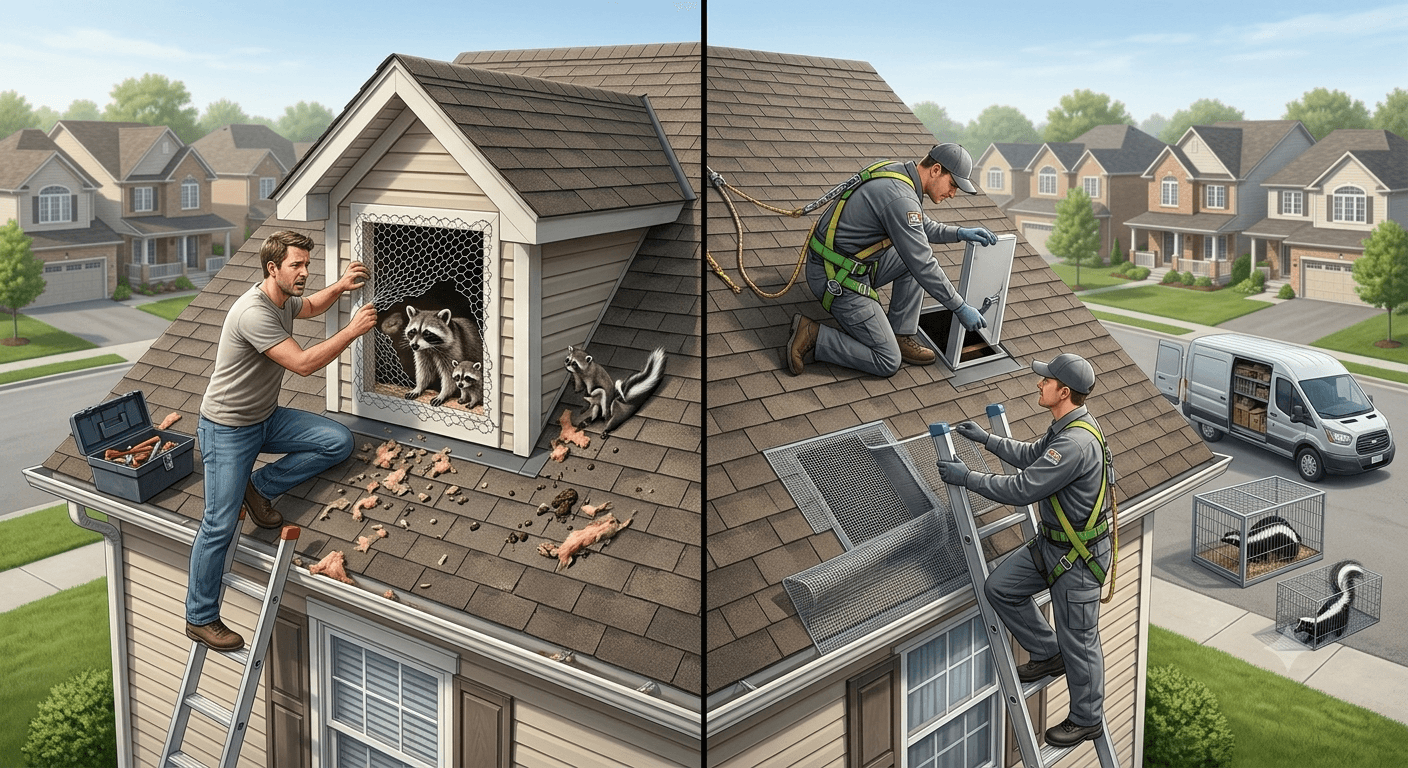
A complete wildlife removal guide is not just about getting an animal out. It is about doing so safely, legally, and in a way that stops the problem from returning next season.
How to Keep Wildlife From Coming Back
Removal solves today's problem. Prevention keeps it from happening again.
- Trim tree branches that hang close to the roofline
- Install sturdy caps on chimneys and vents
- Seal small gaps around the foundation and soffits before winter
- Store garbage in secured bins and bring pet food indoors at night
- Keep firewood piles away from the exterior walls of your home
- Schedule a yearly inspection to catch new gaps before wildlife finds them
Following these steps after professional removal is often the difference between a one-time visit and a repeat problem the following year.
Your Next Step Starts With the Right Call
Wildlife problems rarely fix themselves, and Ontario's rules make DIY removal riskier than it looks on paper. This complete wildlife removal guide gives you the knowledge to spot a problem early, understand what the law allows, and know when professional help is the smarter choice.
If raccoons, squirrels, or skunks have already made themselves at home on your property, Pest Troopers offers licensed, humane wildlife removal across Toronto and the GTA, built around exactly the standards covered in this guide. A quick inspection today can save you months of repairs later.
Frequently Asked Questions
Is it legal to trap wildlife myself in Ontario?
Yes, but only under strict conditions. You must release the animal within 1 kilometre and within 24 hours. Most homeowners find it easier and safer to hire a licensed professional.
What time of year is wildlife removal restricted?
Maternity season, generally March through August for raccoons and squirrels, comes with extra restrictions. Removing an adult during this time can leave young animals trapped inside.
How do I know if I have raccoons or squirrels in my attic?
Raccoons are heavier and more active at night, often making thumping sounds. Squirrels are lighter, faster, and usually active during the day. A professional inspection can confirm which species you are dealing with.
Can I seal an entry point myself once the animal is gone?
You can, but only after confirming no animals remain inside, including young ones. Sealing too early traps animals inside, creating odour and further damage.
Do skunks really need professional removal?
Yes, since a startled skunk can spray at close range. Professionals use methods that avoid direct contact and reduce the risk of spraying entirely.
What happens if wildlife is removed but the entry point is not sealed?
The same animal, or a new one, often finds its way back in within days or weeks. Smells and worn pathways left behind can attract more wildlife over time. Sealing the entry point right after removal is the only way to make the fix permanent.