
Complete Guide to Restaurant Pest Control & Food Safety Compliance in Canada

A few years back, a well-known Toronto diner lost nearly 40 percent of its regular customers in under two weeks. Not because of bad food. Not because of poor service. Because someone posted a photo of a cockroach sitting on a bread basket, and it went viral overnight.
That story is not unusual. It happens more often than the industry likes to admit. And the frustrating part is that most of those businesses had decent kitchens. They just never treated Restaurant pest control Canada requirements as something worth taking seriously until it was too late.
Pests do not announce themselves. They settle into the quiet corners of your facility, multiply steadily, and usually only become visible when the problem is already significant. By then, you are not just dealing with an exterminator visit. You are dealing with a CFIA inspection finding, a potential licence issue, and a customer base that has already heard about it. This guide exists to help you get ahead of all of that before any of it happens.
Why This Problem Runs Deeper Than Most Operators Realize
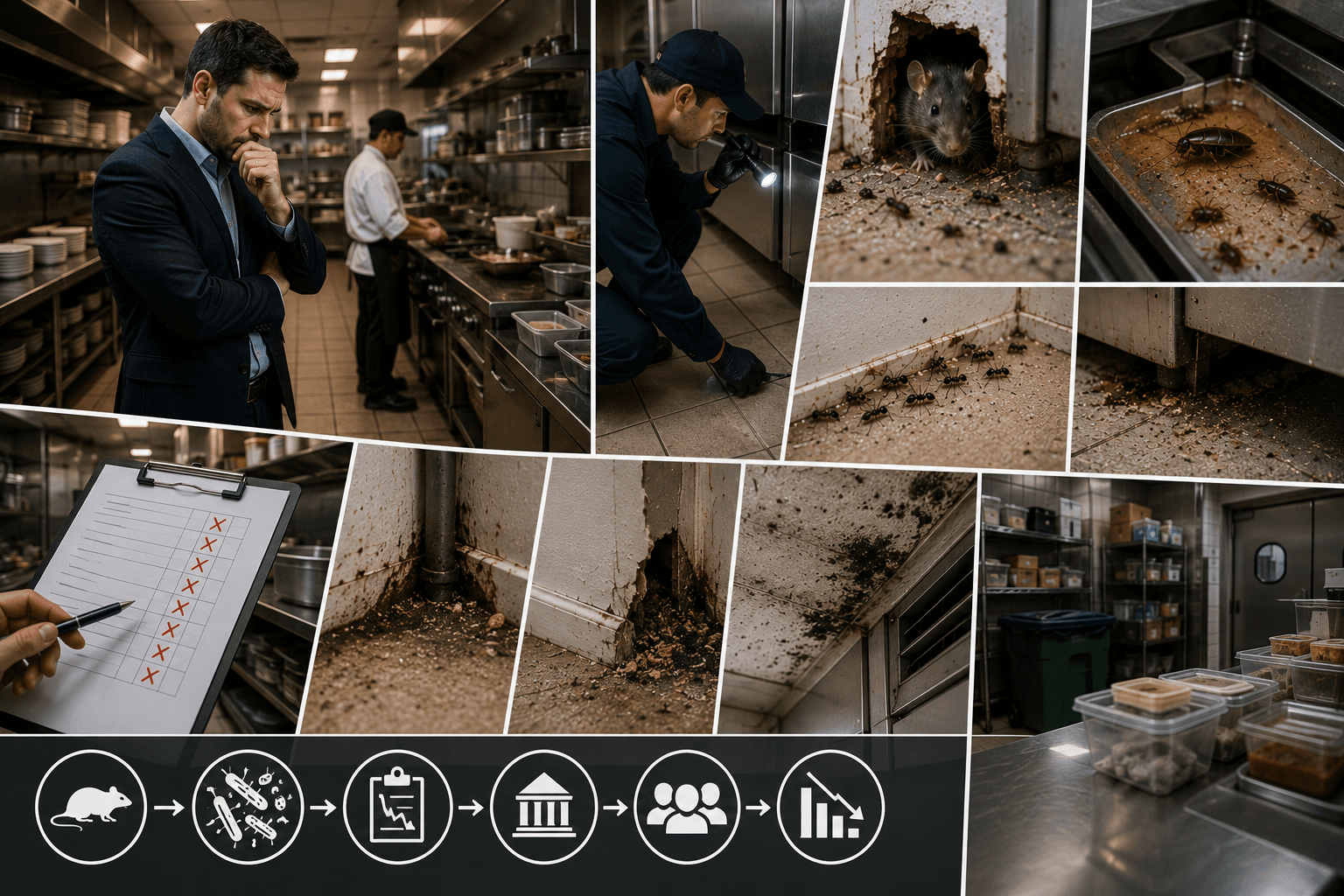
Ask most restaurant owners what pest control means to them, and they will tell you it means calling a company when they see something. That mindset is exactly the gap that gets businesses into trouble during food safety inspections.
The reality is that under the Safe Food for Canadians Regulations, pest control is not a reactive service you bring in when needed. It sits inside your Preventive Control Plan as a core requirement. The Canadian Food Inspection Agency does not want to hear that you called someone last month. They want to see a device map, signed service reports, corrective action records, staff training documentation, and evidence that someone in your operation regularly checks for pest activity.
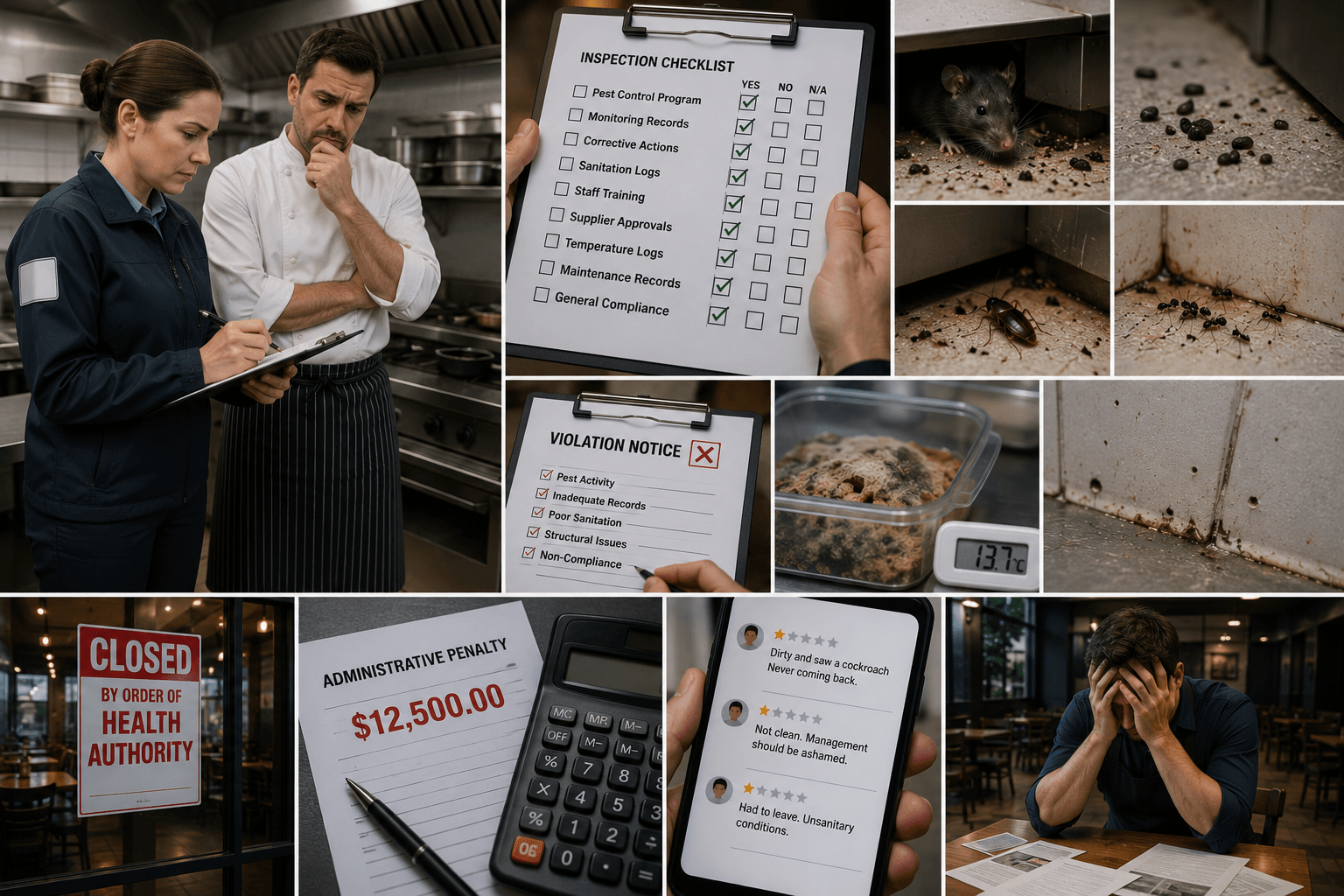
When that paperwork does not exist, it does not matter how clean your kitchen looks on the day of the inspection. A clean kitchen without documentation looks the same to a CFIA inspector as a kitchen with a problem and no documentation. Both result in non-compliance findings.
There is also a health angle here that gets overlooked in the day-to-day rush of running a busy kitchen. Cockroaches carry Salmonella and E. coli on their bodies and legs. Rodents leave urine trails across surfaces and inside stored ingredient bags. Flies land on waste and then on your prep surfaces within minutes of each other. Every one of these pests introduces biological hazards into your food environment that your customers then consume. The link between uncontrolled pest infestation and foodborne illness outbreaks is direct and well-documented.
What makes restaurant pest control Canada compliance feel overwhelming to a lot of operators is that they treat it as a separate department from their food safety system. Once you understand that pest management feeds directly into your hazard analysis, your sanitation program, and your HACCP plan(Hazard Analysis and Critical Control Point), the whole thing starts to feel a lot more logical. You are not managing pests on one side and food safety on the other. You are managing one connected system.
How to Build a Restaurant Pest Control Canada System That Holds Up
Walk Your Own Facility First
Before you hire anyone or buy any equipment, spend an hour walking your building properly. Not a glance around. A real walkthrough where you get down low, move equipment away from walls, open storage areas you do not normally open, and check the exterior foundation from corner to corner.
You are looking for cracks around pipes, gaps under exterior doors, pooling water near drains, food debris behind equipment, dark, undisturbed corners where insects could nest, and any sign of previous pest activity like droppings or grease trails. Write it all down. That list becomes the starting point for your pest management plan and directly informs the conditions respecting the establishment section of the SFCR.
Remove Everything Pests Are Coming For
Pests are not coming to your restaurant because they like the décor. They are coming because your facility has food, moisture, and shelter. Take those things away, and you make the environment genuinely unattractive to them.
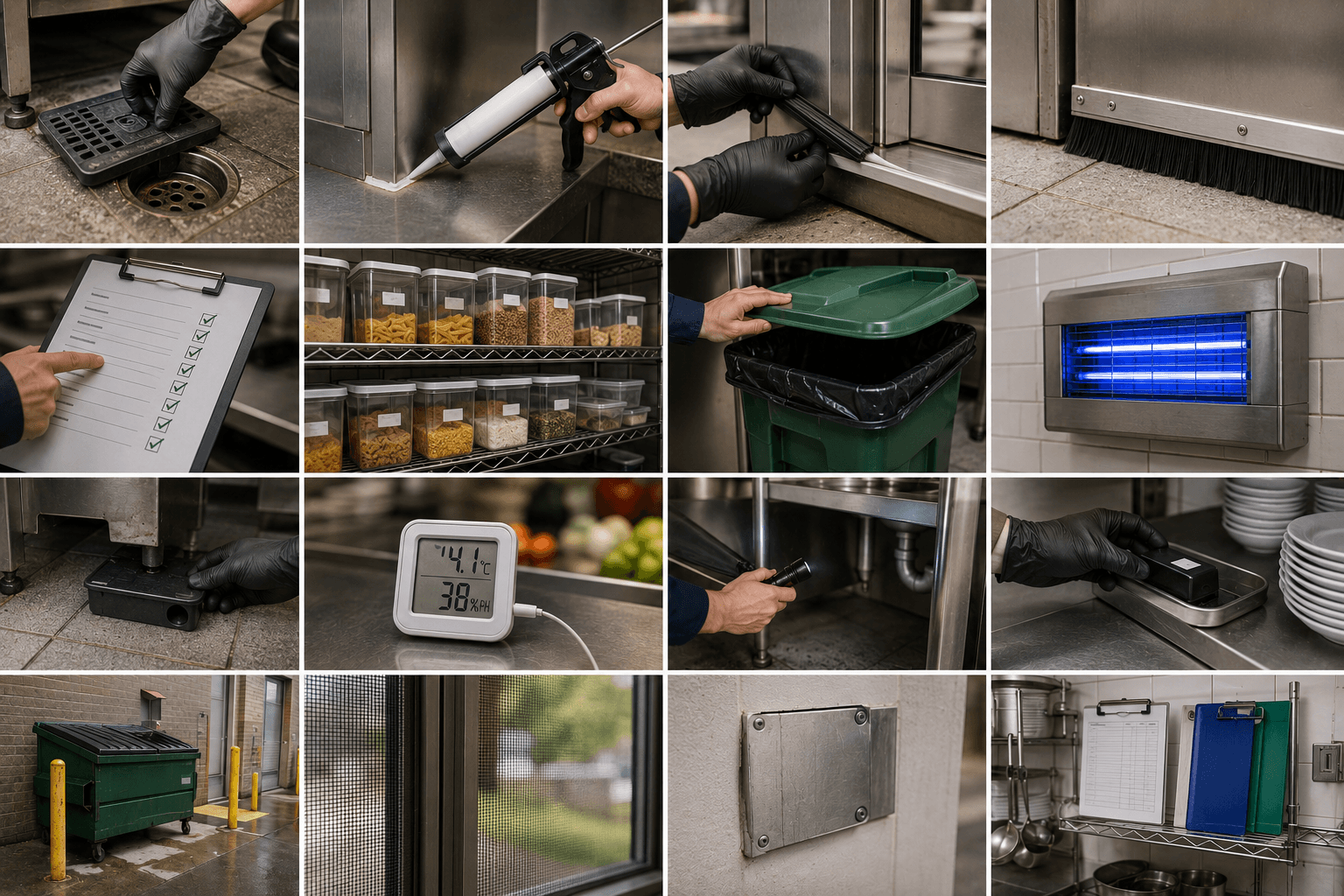
Cover every garbage bin with a properly fitted lid and empty them before they get full, not when they overflow. Fix any dripping taps, leaking pipes, or drainage issues that leave standing water anywhere in the building. Store dry goods in sealed, food-grade containers and keep them on shelving or pallets well away from walls. These are not complicated changes, but they consistently make the biggest practical difference.
Make Your Building Hard to Enter
A full-grown mouse can get through a gap roughly the size of a ballpoint pen. Cockroaches need even less. Check every exterior door for light showing underneath or around the frame. Install door sweeps where gaps exist. Screen every window, air vent, and utility pipe opening. If your kitchen has a high-traffic entry door that gets propped open during deliveries, consider installing an air curtain to block flying insects during those periods.
Set Up a Proper Device System
Partner with a licensed commercial pest management company like Pest Troopers to install bait stations and mechanical traps at appropriate locations throughout your facility. Every device needs to be numbered and marked on a signed and dated facility map. Inspect the map and the devices on a fixed schedule. Inside your building, bait should only ever sit inside an enclosed trap, never loose on the floor. Keep fly control devices away from any area where food is prepared, stored, or packaged.
Get Monthly Professional Inspections and Keep the Reports
Monthly inspections are the minimum frequency required while your operation is running or while food and packaging are stored on site. Your pest control contractor needs to give you a written report after every single visit. That report should cover what was inspected, what activity was observed, what products were used, including the product name and concentration, and what corrective actions they recommend. File every report. Do not throw them away after a few months.
Train Your Staff Properly and Record It
Your team is genuinely your best early warning system. A prep cook who knows what rodent droppings look like and reports them immediately is worth more than any trap you install. Every staff member, including seasonal workers, contractors, and anyone who enters your production or storage areas, needs documented training on pest awareness, proper waste handling, and personal hygiene standards. Training records must show names, dates, what was covered, and who conducted the session.
Real Situations That Show Why the Paperwork Matters
Starting a blog may seem daunting, but with the right approach, it can be a rewarding experience. Here are some steps to guide you:
- Choose a Niche: Focus on a specific area that you're passionate about and knowledgeable in.
- Define Your Audience: Understand who you are writing for and tailor your content to their needs and interests.
- Create a Content Plan: Develop a schedule and stick to it. Consistency is key to building an audience.
- Promote Your Blog: Use social media, email newsletters, and collaborations to reach a wider audience.
Remember, patience and persistence are essential. Building a successful blog takes time, but the rewards are well worth the effort.
Smaller Details That Make a Real Difference
Staying compliant with restaurant pest control Canada standards long-term comes down to a handful of habits that do not take much time but consistently prevent the situations that cause serious problems.
Check your exterior building at the change of each season. Spring melt and autumn cooling cause materials to shift and new gaps to appear. These are the times when rodents are most actively looking for warm entry points. A quick walk around the outside of your building in March and October catches problems before they become infestations.
When your facility layout changes, update your pest control device map immediately. A bait station that ended up behind a new piece of equipment after a kitchen renovation is essentially invisible and useless. An outdated map gives you confidence that your system is working when it might not be.
Be careful with bait products that contain allergens. Some rodent baits use cheese or peanut butter-based attractants. If those products are used inside your facility, they represent a potential allergen contamination risk that sits right alongside the pest hazard you are trying to address. Check ingredients before approving any bait product for use inside your building.
Position fly control lights carefully. A unit installed directly above a prep station or an open ingredient container is a physical contamination hazard waiting to happen. Dead insects falling onto food contact surfaces can trigger a non-compliance finding just as quickly as a live pest sighting would.
Conclusion
Running a food business in Canada means accepting that restaurant pest control Canada compliance is part of the job, not an occasional expense. Pests are patient. They work slowly and quietly, and they take advantage of every gap in your system that you are too busy to notice.
The operators who stay out of trouble are not necessarily the ones with the most expensive pest control contracts. They are the ones who have built honest systems, trained their teams to pay attention, kept their documentation current, and treated monthly inspections as seriously as they treat their food prep schedules.
Take what you have read here and start with the walkthrough. Find the gaps in your own facility before a CFIA inspector finds them for you. Build your pest management program into your Preventive Control Plan the way the regulations actually require. And keep the paperwork. Every log, every service report, every training record, it all matters more than you think when an inspector is standing in your kitchen taking notes. Pest Troopers is here to help you build a compliant, inspection-ready pest management program that protects your business, your reputation, and your customers every single day.
Frequently Asked Questions
Q1. Is pest control legally required for restaurants in Canada?
Yes, the Safe Food for Canadians Regulations require all licensed food businesses to include a documented pest management program within their Preventive Control Plan. This applies to operations of every size, from small home-based food producers to large processing facilities. The CFIA checks for this documentation during both scheduled and unannounced inspections.
Q2. How often should a Canadian restaurant schedule professional pest inspections?
Monthly inspections are the minimum required frequency under the SFCR while your operation is active or while food and packaging are stored on site. Seasonal operations should also complete pre-season and post-season inspections before starting up and after shutting down. Every professional visit must be followed by a written service report that you keep on file.
Q3. What do CFIA inspectors actually look for when it comes to pests?
Inspectors look for droppings, grease trails along walls and baseboards, chewed or damaged packaging, insect body parts near light fixtures, nesting materials in equipment corners, foul odours, and unusual sounds inside ceilings or wall cavities. Outside the building, they also check for pest harbourage conditions like overgrown vegetation, stacked old pallets near the structure, and compost or waste piles close to entry points.
Q4. Can a restaurant owner manage their own pest control without a professional company?
Self-managed pest control is permitted under the SFCR provided that all required documentation is properly maintained throughout the year. If commercial or restricted class pesticides are being applied, the person responsible must hold a valid pesticide applicator certificate. All products must carry a Canadian PCP registration number and be used and stored strictly according to their label instructions.
Q5. What records does a Canadian restaurant need to keep for pest control?
You need pest control inspection logs, contractor service reports from every visit, safety data sheets for all pesticide products used, your numbered device map signed and dated, corrective and preventive action reports for any findings, and employee training records covering pest awareness training. All of these documents must be kept accessible in Canada for a minimum of two years from the date they were created.
Q6. Which parts of a restaurant are most likely to attract pests?
The highest-risk areas consistently include waste and garbage zones both indoors and at exterior dumpsters, dry food storage rooms with dark corners, floor drains that collect organic buildup, receiving docks where incoming deliveries go uninspected, large equipment with internal cavities and hard-to-reach spaces, and exterior doors and windows with gaps or inadequate screening. These spots need the most frequent attention in your regular monitoring schedule.