
The Hidden Cost of Ignoring Pest Control in Commercial Buildings: Reputation, Legal & Financial Risk

Most business owners think about pest control only after a pest shows up somewhere it should not be. By the time that happens, the real cost is already piling up in ways that go far beyond the price of a treatment. commercial pest control is not just a cleaning line item; it is protection for your reputation, your legal standing, and your bottom line all at once.
A single pest sighting inside a restaurant, office, warehouse, or retail store can trigger a chain reaction that most owners never see coming until it hits them directly. This guide breaks down the hidden costs of ignoring commercial pest control and why building a proactive plan protects far more than just your building.

Why Businesses Underestimate Pest Risk
Many business owners assume pests are a minor issue that can be handled with an occasional spray or a quick call once something is spotted. This mindset works fine for a small home, but commercial spaces operate under a completely different set of rules.
Commercial buildings deal with constant deliveries, shared walls with neighbouring units, higher foot traffic, and larger storage areas. All of these create more entry points and more reasons for pests to stick around. A warehouse near a loading dock faces different risks than a downtown office tower. Yet both share one thing in common: a single infestation can spiral into a much bigger problem if it goes unnoticed for even a few weeks.
The scale of a commercial space also means pests have more places to hide undetected. A small home might reveal a problem within days, simply because residents notice activity quickly. A large warehouse or a multi-floor office building, though, can hide a growing infestation for months. This is especially true in storage rooms, utility closets, or drop ceilings that go unchecked between inspections.
This is exactly why commercial pest control needs to be treated as an ongoing responsibility rather than a reactive fix applied only after a problem becomes visible.
The Reputation Risk Nobody Talks About
Word travels fast when a business has a pest problem, and in today's world it travels even faster online. A single photo of a rodent near a dining table or an insect crawling across a shelf can end up on social media within minutes, reaching thousands of people before a business owner even knows there is a problem.
Online reviews carry enormous weight for restaurants, retail stores, hotels, and offices. A negative review mentioning pests tends to stay visible for years, and it often influences potential customers far more than a dozen positive reviews combined. Once trust is broken this way, rebuilding it takes considerably more time, money, and effort than the cost of preventing the issue in the first place. This kind of reputation damage from pest infestation is often the hardest cost for a business to recover from.
This protects more than the physical building. It protects the public perception that keeps customers walking through the door in the first place.
The Legal and Regulatory Risk Businesses Face
Beyond reputation, pest problems carry real legal weight for food businesses across Ontario. Under Ontario's Food Premises Regulation (O. Reg. 493/17), made under the Health Protection and Promotion Act, a serious pest-related violation identified during a public health inspection can lead to enforcement action, including potential closure in severe cases. These commercial pest control regulations apply regardless of a business's size or industry.
Every food establishment is required to have a pest control plan and must be protected against the entry of pests to avoid contamination of food and food-contact surfaces. This kind of requirement makes pest control compliance for businesses a legal necessity, not a courtesy. Inspectors classify infractions by severity. A gross unsanitary condition, such as an active rodent infestation, may result in a closure order or other enforcement action, depending on the severity of the violation. The business must then pass a re-inspection before it can reopen.
In Toronto specifically, the scale of this kind of enforcement has been well documented. A Global News analysis of the city's DineSafe data found that, between 2011 and 2013, 973 health citations tied to rodents, insects, or inadequate pest control were issued to 754 different Toronto establishments, and 87 of those businesses were forced to close at least temporarily as a result. That data is now over a decade old, but it illustrates how quickly a single infraction can escalate into a full closure, a risk that exists under the same provincial regulation wherever a business operates in Ontario. These figures show how quickly health code violations and pest infestation issues can escalate into a full operational crisis.
Non-food businesses are not exempt from legal exposure either. Offices, retail stores, and warehouses can face liability claims if pests cause property damage, contaminate goods, or create unsafe working conditions for employees. Commercial pest control is not just about passing an inspection; it is about protecting a business from fines, closures, and potential lawsuits down the line.
The Financial Cost That Adds Up Quickly
The financial impact of ignoring pest control rarely shows up as one large expense. It builds gradually through a combination of smaller losses that add up fast. Understanding where these costs come from makes it easier to see why prevention is almost always cheaper than damage control. In many cases, the true cost of pest infestation in commercial buildings only becomes clear once several of these losses stack up.
Lost inventory is one of the most immediate costs, since rodents and insects contaminate stored food, packaging materials, and merchandise, forcing businesses to discard entire batches of product. Equipment damage follows closely behind, as rodents are known to chew through wiring, insulation, and even structural materials, leading to costly repairs that were never budgeted for.
Closure-related losses hit even harder. A temporary shutdown means lost revenue during the closure, wages still owed to staff, and the added cost of emergency treatment needed to reopen quickly. Employee turnover is a less obvious cost, but staff working in visibly infested conditions are far more likely to leave, adding recruitment and training expenses on top of everything else.
Insurance is another factor many business owners overlook. Depending on the policy, some commercial insurance plans may exclude certain pest-related damage or have specific requirements for coverage. A business without documented prevention measures in place may find itself covering repair and replacement costs completely out of pocket, right when cash flow is already strained by a closure or cleanup effort.
Choosing a proactive prevention plan spreads these costs out into manageable, predictable payments, instead of one unpredictable financial hit that can strain a business at the worst possible time. A scheduled inspection costs a fraction of what a closure notice, a damaged reputation, or a lawsuit ends up costing over time.
Common Pests That Target Commercial Spaces
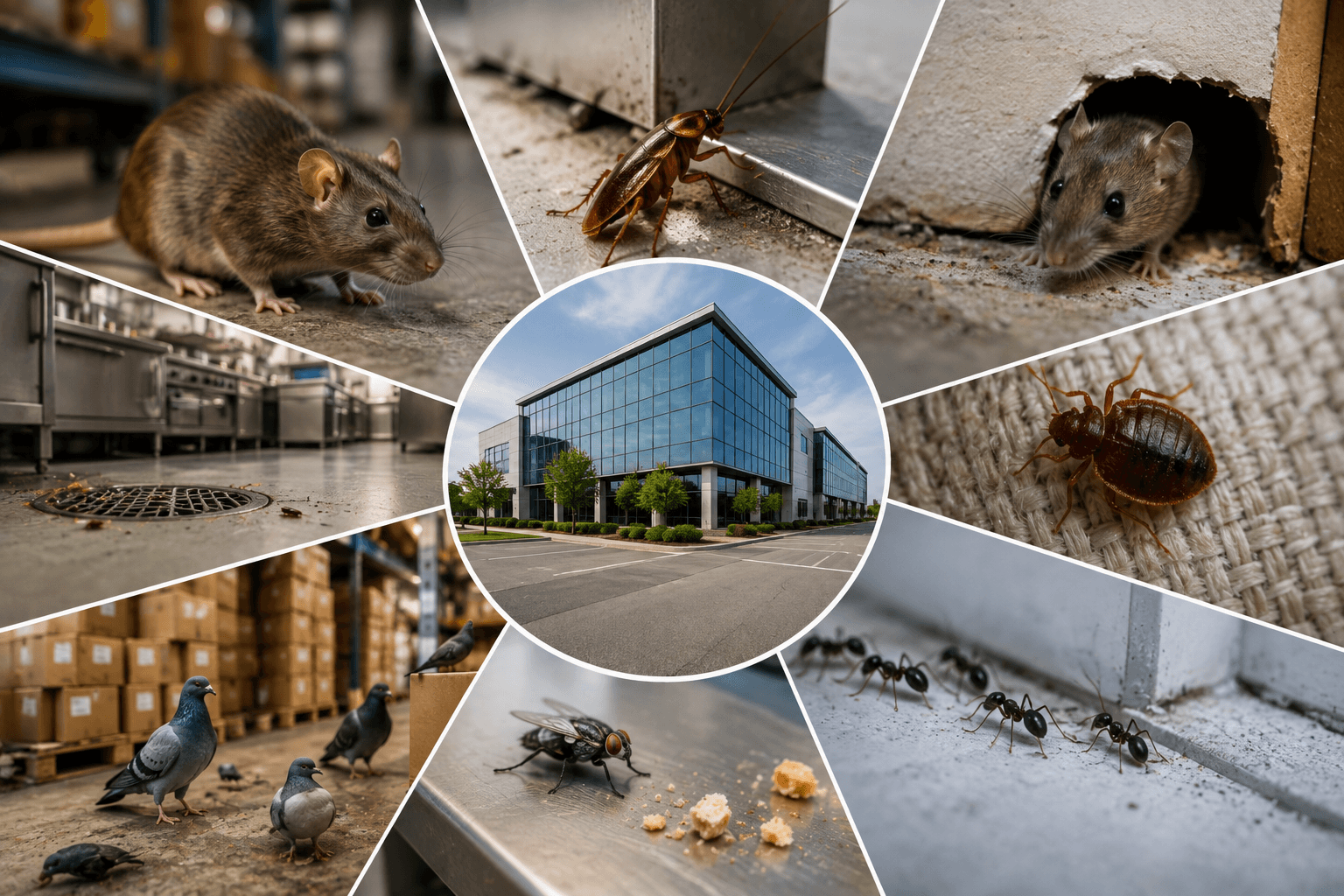
● Different types of businesses attract different pests, but a few species show up across nearly every commercial setting in Ontario.
● Rodents remain one of the biggest threats, particularly in buildings near loading docks, alleys, or older infrastructure where foundation gaps are common.
● Cockroaches are a constant concern in any space that handles food, since they reproduce quickly and are notoriously difficult to eliminate once established.
● Flies become a major issue around garbage areas and loading docks, especially during warmer months when populations grow fastest.
● Stored product pests, including certain beetles and moths, target warehouses and retail stockrooms where bulk goods sit for extended periods.
● Recognizing which pests are most likely to target your specific type of business is the first step toward building an effective prevention plan.
Building a Proactive Prevention Plan
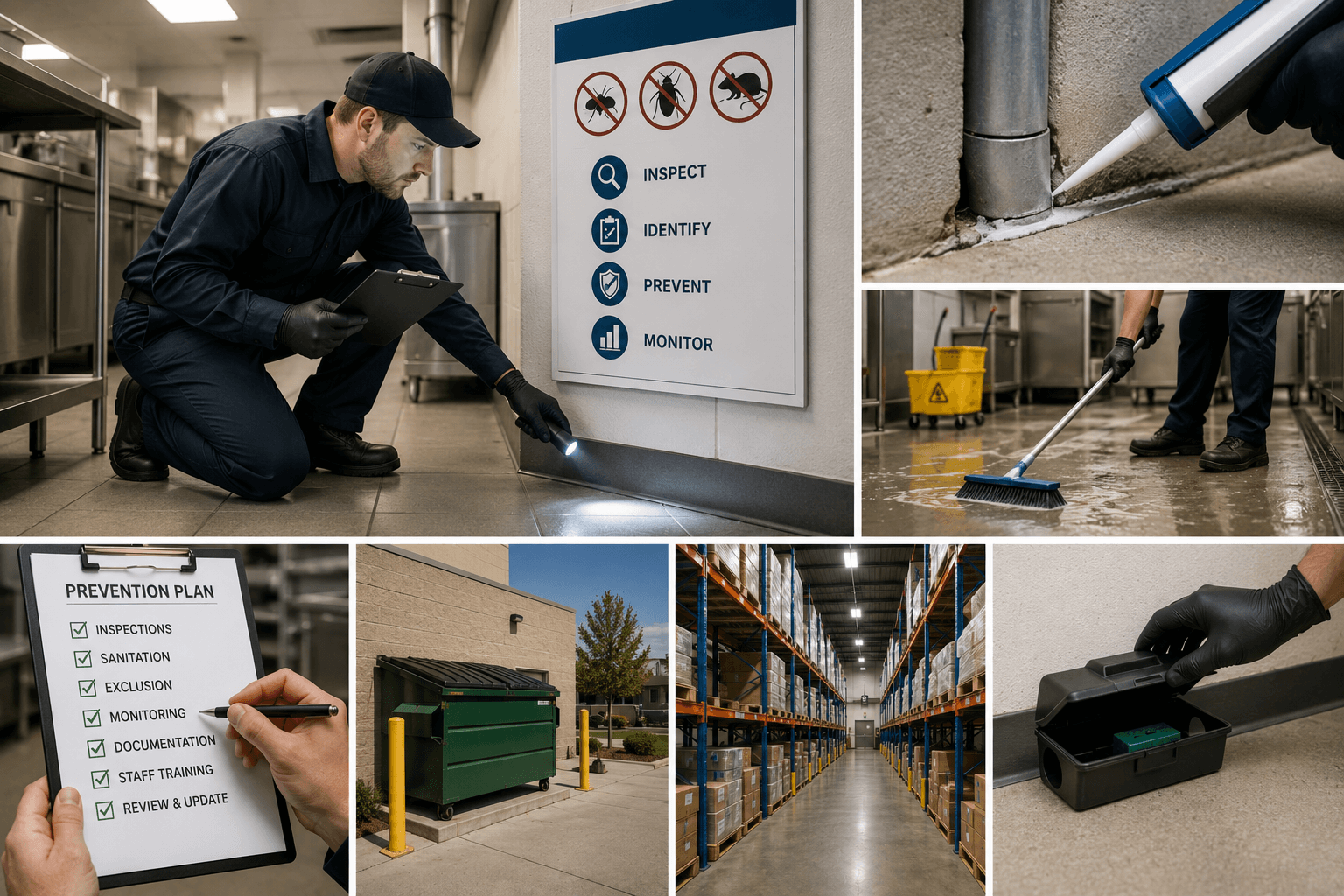
The businesses that avoid costly infestations are the ones that treat pest control as routine maintenance rather than an emergency response. A strong plan typically includes the following steps.
• Schedule regular inspections rather than waiting for visible signs of activity.
• Seal entry points around doors, windows, loading docks, and utility lines.
• Train staff to recognize early warning signs like droppings or gnaw marks.
• Keep storage areas organized and off the ground to reduce hiding spots.
• Manage waste disposal properly and keep bins sealed and away from entrances.
• Document every inspection and treatment for compliance and audit purposes.
This kind of routine turns commercial pest control into a manageable part of daily operations, instead of a stressful scramble whenever an inspector or a customer spots a problem first. Building preventive pest management for businesses into daily habits is what separates businesses that avoid costly disruptions from those that do not.
The Industries Facing the Highest Exposure
Not every business carries the same level of pest risk, and understanding where your industry falls helps determine how aggressive your prevention plan needs to be. Restaurants and food service businesses sit at the highest risk level, given the direct link between pest activity and health code violations. Grocery stores and food warehouses follow closely, since bulk storage creates ideal conditions for stored product pests and rodents alike.
Hospitality businesses, including hotels and short-term rental properties, face a different kind of exposure, since bed bugs and other pests can spread through guest complaints and online reviews just as quickly as a restaurant closure spreads news. Office buildings and retail stores carry comparatively lower risk, but are far from immune, particularly in older buildings or those located near green spaces, alleys, or shared waste areas.
Whatever industry a business operates in, the underlying lesson stays the same: prevention scales with risk, and the businesses that assess their specific exposure early are the ones best positioned to avoid the costs covered throughout this guide.
Protect What You Built With Pest Troopers by Your Side
Ignoring pest control might seem like a minor oversight, until the moment it costs a business its reputation, its compliance standing, or thousands of dollars in losses that could have been avoided entirely. commercial pest control is not an optional expense; it is a safeguard for everything a business has worked to build.
If your business needs a reliable partner to stay ahead of these risks, Pest Troopers offers inspections and treatment plans built specifically for commercial spaces, helping business owners across Ontario protect their operations before a small issue becomes a costly one.
Schedule a commercial pest control Inspection with Pest Troopers today and take the first step toward protecting your business.
Frequently Asked Questions
What counts as commercial pest control?
This service covers pest prevention and treatment designed specifically for businesses like restaurants, offices, and warehouses. It focuses on compliance, larger-scale prevention, and protecting operations from disruption. This differs from residential services in scope and regulatory requirements.
Can a pest sighting really force a business to close?
Yes. Under Ontario's Food Premises Regulation (O. Reg. 493/17), a serious pest infraction can result in an immediate closure notice. Businesses must pass a re-inspection before reopening. This makes prevention far less costly than dealing with an active infestation.
How often should a commercial property be inspected?
Most commercial spaces benefit from quarterly or monthly inspections depending on the industry and risk level. Food service businesses often need more frequent checks. Regular inspections catch problems before they escalate into violations. Scheduling a commercial property pest inspection on a set schedule keeps small issues from becoming expensive ones.
Do office buildings need pest control too?
Yes. Offices face risks from rodents, insects, and stored pests just like retail or food businesses. Pest activity can damage equipment and create unsafe conditions for employees. Prevention protects both property and workplace wellbeing.
What is the biggest financial risk of ignoring pests?
Closure-related losses tend to be the most damaging, combining lost revenue, wages, and emergency treatment costs all at once. Equipment damage and inventory loss add to the total. Prevention spreads costs out instead of creating one large financial hit.
How does commercial pest control protect reputation?
Preventing visible pest activity avoids negative reviews, social media exposure, and customer distrust. A single incident can affect a business's image for years. Consistent prevention keeps that risk from ever becoming a reality.
How much does commercial pest control cost?
The cost of commercial pest control varies depending on the size of the property, type of pest, level of infestation, treatment required, and frequency of service. A professional inspection can help determine the right treatment plan and provide a more accurate estimate.