
Signs of Rodent Infestation and What to Do: A Complete Guide for Ontario Homeowners


Winter does not just bring colder temperatures to Ontario homes. It also drives mice and rats indoors looking for warmth, food, and shelter.
That faint scratching sound behind your wall, the droppings near your pantry, or the unusual noise coming from your attic may seem harmless at first. However, these are often the earliest signs that rodents have already entered your home.
Rodents are among the most common household pests in Ontario because they can squeeze through surprisingly small openings, hide inside walls and insulation, and reproduce quickly once they find a safe environment.
A single mouse can turn into a much larger infestation within weeks if the problem is ignored. Beyond being a nuisance, rodents can damage electrical wiring, contaminate food storage areas, and create health risks for your family.
This guide explains the most common signs of a rodent infestation, why Ontario homes are vulnerable, what steps homeowners should take immediately, and when professional rodent pest control becomes the safest solution.
Why Ontario Homes Face a Growing Rodent Problem
Ontario provides almost everything rodents need to survive:
● Cold winters that push pests indoors
● Older homes with aging foundations
● Dense residential neighbourhoods
● Construction activity that disturbs nesting areas
● Easy access to food waste and shelter
From Toronto and Mississauga to Ottawa and smaller communities across southern Ontario, homeowners commonly deal with mice and rats entering through foundation cracks, garage gaps, vents, and utility openings.
Rodents are especially active between October and February when outdoor temperatures drop. During this period, mice and rats search for warmer spaces such as:
● Wall cavities
● Basements
● Attics
● Crawl spaces
● Garages
● Kitchen cabinets
Many homeowners do not realize they have a rodent problem until they notice visible damage or hear noises at night. By that stage, rodents may already have established nesting areas inside hidden parts of the property.
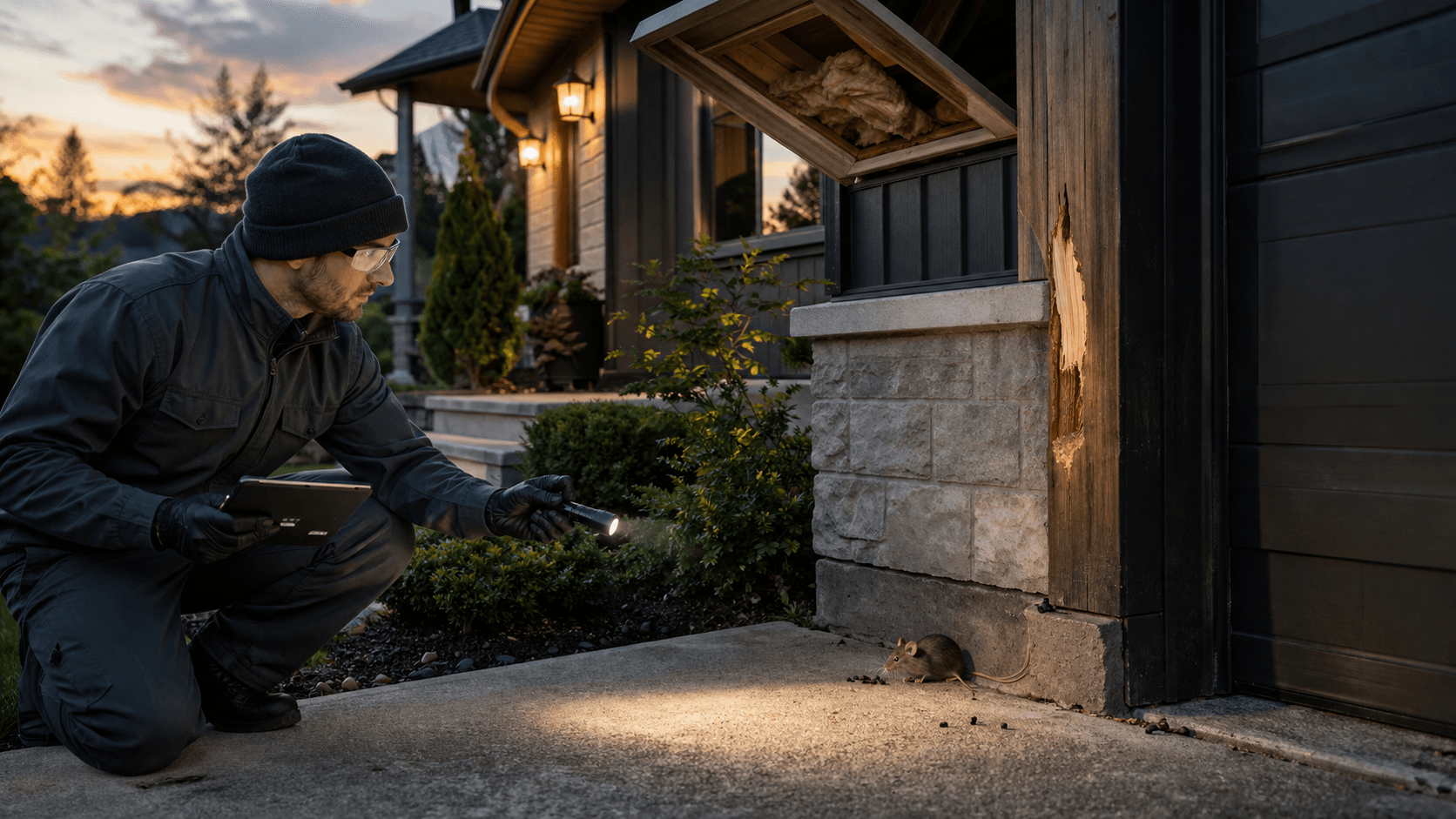
How Rodents Enter Ontario Homes
One reason rodent infestations spread quickly is that these pests only need a very small opening to enter.
House mice can squeeze through gaps as small as 6 mm, which is roughly the size of a pencil eraser.
Common rodent entry points include:
● Gaps around plumbing pipes
● Cracks in foundations
● Damaged garage door seals
● Roof vents and soffits
● Openings around electrical lines
● Spaces beneath doors
Many homeowners seal visible cracks but overlook hidden entry points behind appliances, utility connections, and exterior structures.
Professional rodent inspections focus on finding these overlooked access points because removing existing rodents without blocking entry routes often leads to repeated infestations.
Common Signs of a Rodent Infestation in Ontario Homes
Rodents are nocturnal and naturally avoid humans, which means you may notice evidence of their activity before seeing the actual animal.
The most common warning signs include:
Rodent Droppings Near Food or Storage Areas
Droppings are often the first visible sign homeowners notice.
Look for them around:
● Pantry shelves
● Kitchen cabinets
● Behind appliances
● Basement storage areas
● Along baseboards
Fresh droppings are usually dark and moist-looking, while older droppings become dry and crumbly.
A few droppings may indicate recent activity, but repeated findings usually suggest rodents are actively living inside the property.
Scratching or Scurrying Sounds at Night
Rodents are most active after dark.
Common noises include:
● Scratching inside walls
● Running sounds above ceilings
● Movement behind appliances
● Chewing noises from hidden areas
If you regularly hear these sounds when the house is quiet, there is a strong chance rodents are moving through wall cavities, attics, or crawl spaces.
3. Gnaw Marks on Wood, Food Packaging, or Wiring
Rodents must constantly chew because their teeth continue growing throughout their lives.
You may notice:
● Chewed food boxes
● Damaged wooden surfaces
● Bite marks on plastic containers
● Exposed electrical wires
Chewed electrical wiring is one of the most serious risks because damaged wires can increase the chance of electrical failures and fires.
4. Nesting Materials
Rodents build nests using soft materials they find around homes.
Common nesting materials include:
● Shredded paper
● Fabric pieces
● Insulation
● Cardboard
● Plant material
Finding these materials in hidden areas such as attics or behind appliances can indicate an established infestation.
Grease Marks Along Walls
Rodents usually follow the same travel routes repeatedly.
As they move along walls, their bodies leave behind dark greasy marks caused by oil from their fur.
These marks are commonly found:
● Along baseboards
● Behind cabinets
● Near entry points
Mouse vs Rat: How to Identify the Problem
Different rodents require different control approaches. The two species most commonly found in Ontario homes are house mice and Norway rats.

Health Risks Caused by Rodent Infestations
Rodents are not just a property problem. They can create serious hygiene concerns inside your home.
They can contaminate:
● Food packages
● Kitchen surfaces
● Storage areas
● Insulation materials
Rodent urine, droppings, and nesting materials may contain harmful bacteria and pathogens.
One important concern is hantavirus, a rare but serious illness associated with exposure to contaminated rodent materials. The Public Health Agency of Canada advises taking precautions when cleaning areas contaminated by rodents because disturbing dried droppings can release particles into the air.
Other diseases associated with rodents include:
● Salmonella
● Leptospirosis
● Food contamination risks
This is why homeowners should avoid sweeping or vacuuming dry droppings. Proper cleanup methods reduce unnecessary exposure.
Property Damage Caused by Rodents
A rodent infestation can become expensive if it is ignored.
Common damage includes:
Electrical Damage
Rodents chew wiring behind walls, inside appliances, and in attics.
Insulation Damage
Nesting activity can destroy insulation and reduce energy efficiency.
Structural Damage
Long-term infestations can affect wood materials, storage areas, and other parts of the home.
Food Loss
Rodents often contaminate much more food than they consume because of droppings and urine.
Many homeowners only discover the financial impact after the infestation has already spread.
What Ontario Homeowners Should Do After Finding Signs of Rodents
If you notice droppings, scratching sounds, or damage, quick action is important.
Start with these steps:
Inspect Hidden Areas
Use a flashlight to check:
● Attics
● Basements
● Crawl spaces
● Behind appliances
Look for droppings, nesting material, and entry points.
Remove Food Sources
Store food in sealed containers and avoid leaving pet food exposed overnight.
Seal Visible Gaps
Check areas around:
● Pipes
● Doors
● Foundation cracks
● Vents
Use durable materials because rodents can chew through many temporary fixes.
Clean Contaminated Areas Safely
Wear gloves, avoid dry sweeping, and disinfect affected areas properly.
Monitor Activity
Traps may help identify whether rodents are still active, but they usually do not solve larger infestations where nests are hidden.
Why Professional Rodent Pest Control Works Better Than DIY
DIY traps can catch individual rodents, but they often do not address the reason rodents entered your home in the first place.
A professional rodent pest control approach focuses on three important steps:
1. Inspection
Technicians identify:
● Entry points
● Nesting locations
● Travel routes
● Level of infestation
2. Rodent Removal
Professional methods target active infestations instead of only the rodents homeowners can see.
3. Exclusion
The most important step is preventing rodents from returning by sealing access points with durable materials.
At Pest Troopers, rodent control focuses on inspection, removal, exclusion, and follow-up monitoring to help Ontario homeowners solve the problem instead of temporarily reducing activity.
Simple Rodent Prevention Tips for Ontario Homes
The best rodent control strategy is preventing mice and rats from entering your home in the first place.
While professional rodent pest control can remove an active infestation, prevention reduces the chances of rodents finding your property attractive.
Ontario homeowners can reduce rodent activity by following these practical steps:
Seal Entry Points Around Your Home
Rodents are excellent at finding small weaknesses in a property.
Inspect your home regularly for gaps around:
● Foundation cracks
● Pipes and utility lines
● Garage doors
● Window frames
● Dryer vents
● Roof openings
Use durable materials such as metal mesh, steel wool, or hardware cloth for small openings because rodents can chew through many temporary repairs.

Keep Food Properly Stored
Food availability is one of the biggest reasons rodents stay inside homes.
Follow these habits:
● Store dry goods in sealed containers
● Keep pet food in airtight bins
● Clean crumbs from counters and floors
● Avoid leaving dirty dishes overnight
● Empty garbage regularly
Even small amounts of accessible food can encourage rodents to remain inside a property.
Maintain Your Yard and Outdoor Areas
Rodents often begin outside before entering a home.
Reduce outdoor hiding spots by:
● Keeping firewood away from exterior walls
● Removing leaf piles and yard debris
● Trimming vegetation near the house
● Keeping shrubs away from foundations
● Maintaining clean storage areas
A clutter-free exterior gives rodents fewer places to hide and nest.
Check Garages, Sheds, and Storage Areas
Garages and sheds are common entry points because they often contain:
● Cardboard boxes
● Pet food
● Seasonal decorations
● Garden supplies
Inspect these areas regularly and avoid storing unnecessary materials directly against walls.
Fix Moisture Problems
Like all animals, rodents need water to survive.
Repair:
● Leaking pipes
● Damaged gutters
● Standing water issues
● Poor drainage areas
Reducing moisture makes your property less attractive to rodents.

Schedule Seasonal Inspections Before Winter
The best time to prevent rodent problems is before they enter.
Early autumn is an ideal time to inspect your home because mice and rats begin searching for warm shelter as temperatures drop.
A seasonal inspection can identify small issues before they become expensive infestations.
When Should You Call Professional Rodent Pest Control?
Many homeowners wonder whether they should handle rodents themselves or contact a professional.
DIY methods may work for very small, early problems. However, professional rodent pest control is usually the better option when you notice:
● Repeated droppings
● Rodent sounds inside walls or ceilings
● Multiple entry points
● Damaged wiring
● Nesting materials
● Rodents appearing during daytime
Seeing rodents during daylight can be a warning sign because it may indicate the population has increased, and hidden spaces are becoming overcrowded.
Professionals do more than remove visible rodents. They identify why rodents entered, locate activity areas, and help prevent the same problem from returning.
Why Ontario Homeowners Choose Pest Troopers for Rodent Control?
A successful rodent solution requires more than setting a few traps.
At Pest Troopers, our approach focuses on understanding the complete infestation:
● Where rodents are entering
● Where they are nesting
● How they are moving through the property
● What needs to be repaired to prevent future activity
Our technicians combine inspection, targeted removal methods, and exclusion techniques to help protect homes across Ontario.
Instead of only treating the symptoms, we focus on addressing the source of the problem.
Whether you are hearing scratching noises at night, finding unexplained droppings, or noticing damage around your home, early action can prevent a small rodent issue from becoming a major infestation.
Do Not Wait Until Rodent Activity Gets Worse
A rodent problem rarely disappears on its own.
Mice and rats reproduce quickly, hide effectively, and can cause damage long before homeowners realize they are present.
The earlier you identify the warning signs, the easier and more affordable the solution becomes.
If you notice scratching sounds, droppings, chewing damage, or signs of nesting, contact Pest Troopers for professional rodent pest control in Ontario.
Protecting your home starts with finding the problem early and stopping rodents before they spread.
Frequently Asked Questions About Rodent Pest Control in Ontario
1. What is the first sign of a rodent infestation?
The first signs are usually small droppings near food storage areas, cupboards, or along walls. Many homeowners also notice scratching noises at night before they ever see a mouse or rat. Fresh droppings, chewing marks, and unusual smells usually indicate that rodents are actively using the space.
2. How do I know if I have mice or rats in my house?
The easiest clues are droppings, noise level, and damage patterns. Mice usually leave smaller droppings and create lighter scratching sounds. Rats produce larger droppings, louder movement, and often cause more noticeable chewing damage. A professional inspection can confirm the species and determine the best treatment approach.
3. Can mice get into my home through very small holes?
Yes. House mice can enter openings as small as approximately 6 mm. This means even tiny gaps around pipes, vents, doors, and foundations can become entry points. Sealing these openings is one of the most important steps in preventing infestations.
4. Can I remove rodents without professional help?
A small, early infestation may sometimes be managed with traps and sealing entry points. However, DIY solutions often fail when rodents are nesting inside walls, attics, or insulation. Professional rodent control focuses on locating hidden activity and preventing future entry.
5. Are rodent droppings dangerous to clean?
Yes, rodent droppings should be handled carefully. Avoid dry sweeping or vacuuming because this can disturb contaminated particles. Wear gloves, disinfect the area, and follow safe cleanup practices.
6. What time of year are rodents most active in Ontario?
Rodent activity often increases during colder months, especially from fall through winter. As temperatures drop, mice and rats search for warmth, food, and shelter inside homes, making early autumn an ideal time for prevention.
7. Why do rodents keep coming back after removal?
Rodents often return because the original entry points remain open. Removing rodents without sealing gaps, repairing access points, and addressing food sources usually provides only a temporary solution. Long-term control requires both removal and prevention.
8. How much does rodent pest control cost in Ontario?
The cost depends on several factors, including:
● Size of infestation
● Type of rodent
● Property size
● Required repairs
● Number of follow-up visits
A professional inspection is usually the best way to determine the correct treatment plan.